Understanding Supplier ID 28998869o15 and Pricing Signals
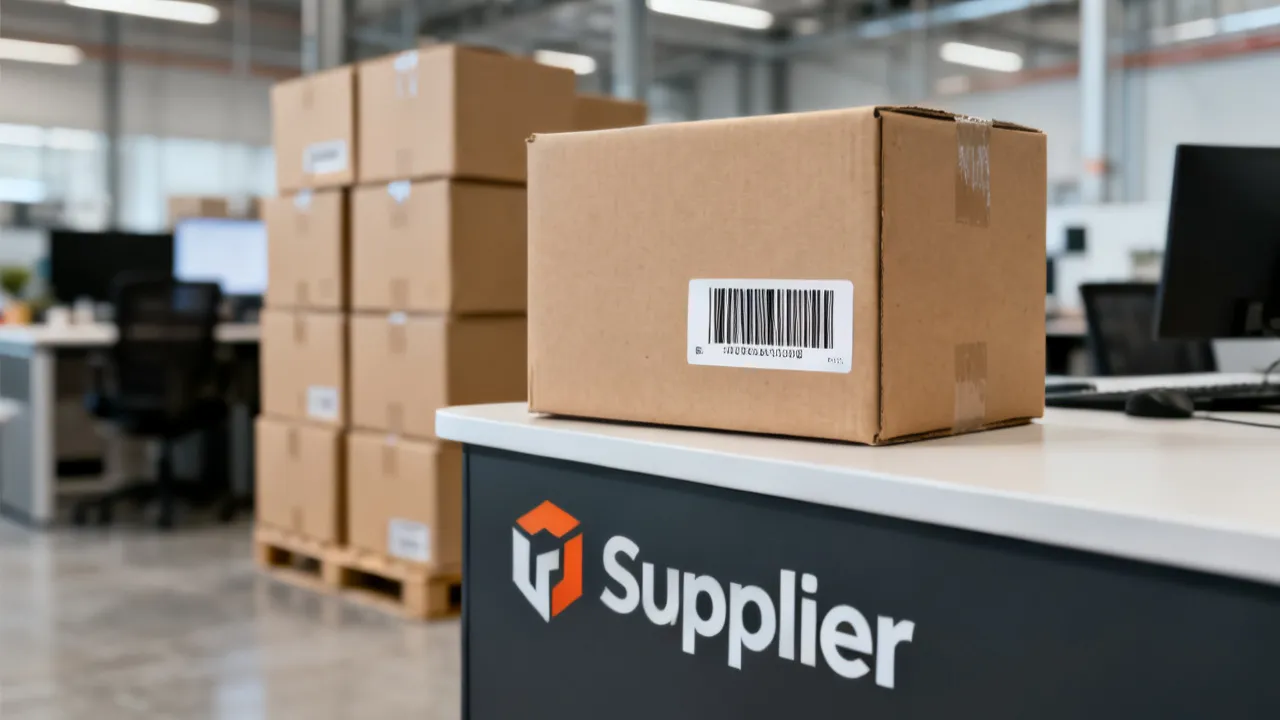
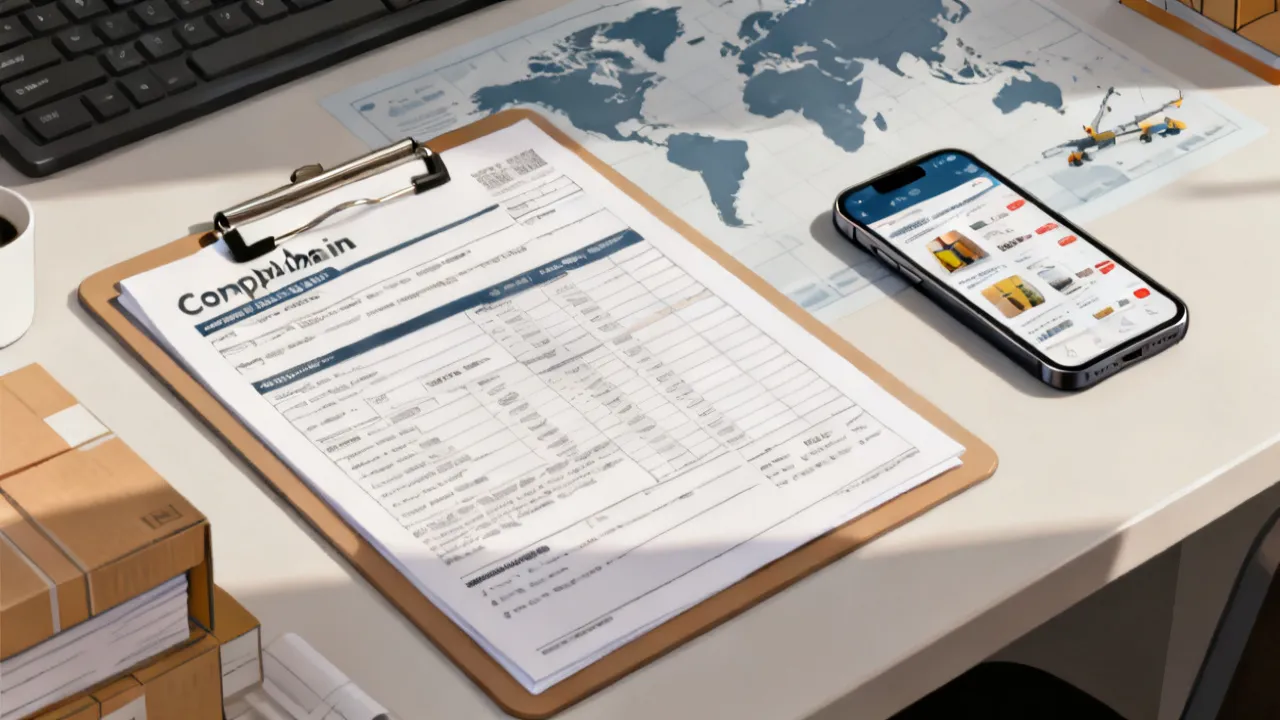
This guide explains how to interpret supplier ID 28998869o15, pricing signals, and sourcing context to support more reliable procurement decisions. Objectively, supplier identifiers and quote structures help buyers validate consistency across orders, forecasts, and documentation, reducing avoidable mismatch risk in sourcing workflows.

Key Takeaways: Interpreting “28998869o15” and Pricing Signals
If you encounter supplier identifier 28998869o15 alongside quote-related details in sourcing documents, treat it as a validation anchor: confirm the identity behind the number, evaluate whether the quote structure aligns with your requirements, and verify that the “nearby” sourcing context supports lead times and compliance expectations.
In procurement and vendor management, identifiers like 28998869o15 and the way a supplier presents price can reveal how consistently a supplier can fulfill, document, and track goods or services. Properly interpreting those signals helps teams avoid operational surprises—such as inconsistent specifications, unclear terms, or mismatched delivery assumptions.
Most importantly, don’t treat supplier IDs and pricing as independent items. The ID is often the glue that connects the supplier’s commercial promise (the quote) to execution artifacts (shipping labels, batch/lot numbers, certificates, packing slips) and then to financial outcomes (invoices, credit notes, reconciliation). When procurement teams validate that glue, they reduce the “hidden cost” of ambiguity: time lost to clarifications, rework caused by specification drift, and risk created by incomplete documentation.
Why Supplier Identifiers Matter in Real Procurement Work
At an expert level, supplier IDs are more than internal labels. They are often used to connect purchasing records to receiving logs, quality documentation, invoice line items, and contract terms. When you see a supplier reference like 28998869o15, the practical question becomes: does this identifier reliably map to the same legal entity, manufacturing site, product configuration, and documentation set across time?
Even without knowing the full business profile behind the digits, you can assess whether the identifier behaves like a stable reference by checking whether it appears consistently on:
- Quotations and purchase orders
- Material/technical datasheets
- Certificates of conformity or test reports
- Invoices and credit notes
- Shipping documents and tracking references
This consistency check is important because many procurement failures are not due to obvious fraud—they are due to administrative drift. A supplier might use different codes for subsidiaries, product lines, or fulfillment centers. That drift can cause downstream friction even when the “product” itself appears correct at first glance.
For example, if 28998869o15 is used on the quote and purchase order, but a different identifier appears on the certificate or packing slip, quality and receiving teams may struggle to associate the delivered item with the correct batch records. That mismatch can lead to hold statuses, delayed releases from inspection, and disputes about whether the delivered goods meet the original technical requirements.
Furthermore, stable identifiers support audit readiness. In regulated or semi-regulated industries—medical devices, aerospace, automotive components, food and beverage inputs, chemicals, and any environment governed by ISO-based quality systems—auditors frequently ask for traceability. Traceability often hinges on how consistently internal and external identifiers are linked. A supplier ID that “mostly” matches is often not enough; auditors typically look for repeatable mapping evidence.
How Pricing Information Should Be Read (Not Just Compared)
Pricing information in sourcing requests rarely means only “how much per unit.” From an industry perspective, a quote can embed assumptions about packaging, minimum order quantities (MOQs), tolerances, included services, inspection requirements, and delivery terms.
When you are evaluating any pricing details connected to 28998869o15, analyze the quote as a structure:
- Unit price vs. total price: Are there quantity breaks or tiered rates?
- What’s included: Does the price include labeling, documentation, testing, or special handling?
- Delivery terms: Are shipping and risk allocation clearly defined?
- Validity window: How long the quote remains accurate can indicate supply stability.
- Payment terms: Longer terms can sometimes correlate with different logistics or inventory strategies.
In professional procurement reviews, the lowest headline price is often treated as a hypothesis rather than a conclusion. Teams aim to confirm that the quote’s underlying assumptions match their operational needs.
To do that, experts frequently decompose quote pricing into its components, then recombine those components into a comparable “landed cost” and “delivered value” view.
Consider the common pattern: two suppliers both list a unit rate, but one includes documentation fees (certificates, test reports), while another charges those as separate line items. Or Supplier A offers a lower unit rate but requires a larger MOQ than Supplier B. Or Supplier A includes basic packaging that does not meet your warehouse handling requirements, increasing your internal receiving and repacking effort. Over time, these “small” differences accumulate into real costs.
Therefore, when a quote is connected to 28998869o15, you should treat the pricing as evidence of how the supplier plans to execute the order: packaging approach, shipping method, documentation pipeline, and lead-time expectations.
Even if you cannot fully verify the supplier’s production processes before purchase, you can test whether the quote behaves like a coherent promise. A coherent quote is one where the technical requirements, quantities, delivery timeline, and documentation list all “line up” logically.
Quality, Traceability, and Documentation: The Hidden “Cost of Ambiguity”
Procurement teams often focus on price, but quality and traceability create the true long-term economics. If a supplier identifier like 28998869o15 is tied to a documentation trail—such as test certificates, batch/lot numbers, and configuration identifiers—it can reduce risk during audits, returns, or incident investigations.
Conversely, if documentation is inconsistent or if lot tracking cannot be reliably linked to the supplier ID, teams may face:
- Extended receiving inspection time
- Rework or replacement costs
- Delays caused by missing compliance paperwork
- Difficulty resolving claims due to mismatched documentation
These effects can outweigh a small unit price advantage—especially in regulated environments or where traceability is operationally required.
Traceability is more than a regulatory checkbox. It’s a practical ability to answer: “When this batch was delivered, what exactly was it, and what evidence proves it?” That “evidence” is usually a chain of documents. And in a chain, the supplier ID often functions as one of the connectors.
To illustrate, suppose a receiving clerk logs items using your internal supplier reference, 28998869o15. Later, a quality team requests certificates that should match the delivered goods. If the certificate references a different supplier ID, certificate may still be valid in content, but the administrative mapping between records becomes harder. Even when the supplier corrects the paperwork, time is lost and the correction may require signatures or formal re-issuance—especially if you operate under documented quality management processes.
Also, documentation ambiguity can create technical ambiguity. If a quote does not specify revision levels of a technical drawing or if it uses inconsistent nomenclature, a supplier might deliver an “equivalent” item. In high-stakes supply chains, an “equivalent” is not always acceptable. Traceability and documentation help confirm whether the delivered configuration is truly the intended one.
From a cost perspective, “ambiguity” can show up as:
- Additional inspection time and documentation review
- Delays in release-to-production or release-to-use
- Claims disputes and administrative escalation
- Potential scrappage if nonconforming items cannot be reworked quickly
Experts try to reduce ambiguity before ordering. One practical method is to require that the supplier include a consistent identifier and a document “bundle” with the shipment or within a strict timeline after shipment. Another method is to require pre-shipment review of packaging labels, part numbers, and certificate formats, especially for regulated goods or complex assemblies.
Supplier Due Diligence: A Practical Risk Lens
When an entry includes 28998869o15 as a supplier identifier, you can run a targeted due diligence workflow without making assumptions about the supplier’s reputation. The goal is to determine whether the supplier ID corresponds to a stable, verifiable source and whether the pricing and terms appear operationally coherent.
Consider the following risk lens:
- Operational continuity risk: Does the identifier map to the same address/sites across orders?
- Specification risk: Do technical documents align with the described product/service scope?
- Commercial risk: Do pricing terms match the quoted deliverable (MOQs, lead times, packaging)?
- Compliance risk: Are certifications or required statements provided in a consistent format?
- Claims resolution risk: Can the supplier connect shipments to documentation quickly?
A strong due diligence workflow is not about distrust—it’s about reducing uncertainty. You don’t need to assume the supplier is unreliable. Instead, you test the supply promise in small, evidence-based ways.
For example, you might request a sample of prior documentation (redacted if needed) where 28998869o15 appears in the chain of evidence. You can verify:
- Whether the supplier name and address are consistent
- Whether certificates reference the correct part numbers and batch/lot information
- Whether packaging labels match what you intend to receive
- Whether shipping documents show realistic dates and tracking patterns
If these checkpoints fail, the “risk lens” helps you decide what to do next: require contract clauses, require inspections, request change-control commitments, or re-quote from a supplier whose documentation pipeline is more coherent.
Positioning “nearby” Sourcing Context Without Overclaiming
The sourcing context you described includes the concept of “nearby.” In general, sourcing from “nearby” regions can sometimes support more predictable logistics, easier coordination, and smoother communication—particularly for industries where frequent iterations, sampling, or rapid clarification are common.
However, “nearby” should not be treated as an automatic guarantee of faster delivery. Transportation mode, customs or border procedures (if applicable), warehousing capacity, and production scheduling still determine actual lead times. Therefore, treat “nearby” as a contextual factor to investigate, not a definitive promise.
Experts typically differentiate between three related concepts:
- Geographic proximity: “Nearby” can mean reduced distance, but distance alone does not define time.
- Logistics predictability: Predictability depends on carriers, lanes, shipping schedules, and whether documentation can move smoothly.
- Operational responsiveness: Responsiveness depends on supplier capacity, planning maturity, and how quickly they can respond to clarifications or engineering changes.
Even if 28998869o15 is associated with a “nearby” sourcing context, you should confirm that the quote’s lead time aligns with your planning calendar. If the quote says “10 days,” but your receiving department typically books inspection windows that start only after paperwork arrives, you need to factor in document turnaround time and shipping variability.
One useful approach is to interpret “nearby” as a hypothesis that needs validation through the quote’s structure and timeline. Ask for a production schedule estimate, a shipment timing plan, and a document delivery method (e.g., email delivery of certificates prior to physical shipment).
Industry Expert Perspective: What High-Performing Teams Do
From an expert procurement standpoint, teams that consistently reduce supplier-related surprises tend to structure decisions around evidence. Instead of evaluating a quote in isolation, they link the supplier identifier—such as 28998869o15—to:
- Historical performance records: On-time delivery and quality outcomes where available
- Document completeness: Whether every required file arrives with the same format and labeling
- Contract clause alignment: Whether terms match procurement policies
- Configuration control: Whether product versions remain stable
This evidence-driven approach tends to improve outcomes even when pricing is comparable among suppliers, because it reduces downstream operational variance.
In practice, high-performing teams treat procurement as a closed-loop system. They don’t just “buy and forget.” They capture how the supplier performed and whether the supplier identifier and documentation chain worked as expected.
For example, a mature team might:
- Track line-item receipt vs. invoice match rates (for orders referencing 28998869o15)
- Log frequency of certificate re-issuance or correction requests
- Record time from shipment to receipt of compliant documents
- Measure defect rates or nonconformance notes by supplier ID
That allows them to convert “supplier identifier behavior” into operational analytics. Over time, they can answer questions like: “When we used 28998869o15 before, how often did we need corrective paperwork?”
Even without long historical data, teams can still improve decisions by requiring structured quote responses. If the supplier cannot produce a clear quote with documentation responsibilities spelled out, that inability is itself a signal about how execution will feel.
Comparison Table: How to Validate Supplier ID and Pricing Before Ordering
| Validation Area | What to Check | Why It Matters | Typical Outcome if Clear |
|---|---|---|---|
| Supplier Identity | Does 28998869o15 map to the same legal entity across docs? | Prevents billing/receiving mismatches. | Consistent entity details and contact points. |
| Quote Structure | Unit vs. total price; MOQs; inclusions/exclusions. | Ensures price matches deliverable scope. | Clear line-item breakdown and deliverable alignment. |
| Technical & Spec Documents | Are specifications, tolerances, and datasheets coherent? | Reduces rework and compatibility issues. | Documentation matches purchase description. |
| Traceability | Are lots/batches linkable to the supplier ID? | Supports audits, recalls, and claim resolution. | Batch references appear on receiving and certificates. |
| “Nearby” Logistics Context | Does the quote reflect realistic delivery assumptions? | Prevents lead-time surprises. | Shipping terms and lead times are plausible and consistent. |
| Payment & Terms | Do payment and incoterms/terms match internal policy? | Minimizes commercial conflict. | Aligned terms and dispute pathways are documented. |
Sources (Methodological Basis)
- ISO 9001 (quality management principles emphasizing documented information, traceability where relevant, and process consistency).
- ISO 31000 (risk management framework guiding how to evaluate operational and compliance risk).
- GS1 traceability and supply chain standards approach (widely used principles for consistent identification and tracking in supply chains).
Step-by-Step Guide: Confirming Supplier ID 28998869o15 With Pricing
- Collect the full quote packet: Save the quotation, any attachments, terms and conditions, specification sheets, and lead-time statements that mention 28998869o15.
- Verify identifier consistency: Check whether 28998869o15 appears on purchase order drafts, invoices, packing documentation, and any certificates. Look for mismatches in legal names or fulfillment sites.
- Normalize pricing components: Convert the quote into comparable line items. Separate base unit price, packaging, documentation fees, testing/inspection charges, and logistics costs.
- Map deliverables to requirements: Crosswalk the quote scope against your internal requirements (specifications, quantity, packaging, labeling, and compliance files).
- Assess “nearby” assumptions: If the sourcing context is “nearby,” confirm that lead times and shipping terms reflect reality for your receiving location and operational schedule.
- Run a documentation completeness check: Use a checklist to ensure every required document is included and that filenames/labels are consistent.
- Clarify change-control: Ask how the supplier handles product revisions or process changes. Ensure there is a mechanism to prevent silent substitutions.
- Negotiate risk controls where needed: If traceability or documentation is weak, request corrective actions, additional inspection rights, or batch identification requirements.
- Document the decision rationale: For auditability and continuous improvement, record why the identifier and pricing were accepted, including which validations were completed.
Conditions and Requirements: When You Should Escalate or Re-Quote
- If 28998869o15 maps to different entities across the quote and invoice preview, request clarification before purchase.
- If the quote does not specify inclusions/exclusions clearly, ask for a restructured quote with line-item transparency.
- If traceability fields (lot/batch identifiers or documentation references) are missing or inconsistent, require a traceability plan or documentation commitment.
- If “nearby” is implied but lead-time assumptions conflict with your operational calendar, request updated delivery commitments in writing.
- If compliance documentation is referenced but not attached or not described (e.g., type of certificate, scope), request confirmation of required documents prior to shipment.
Deepening the Analysis: Practical Questions to Ask About 28998869o15 and the Quote
Beyond the baseline validation steps, experienced buyers often ask targeted questions that test the supplier’s operational readiness. These questions also help you interpret whether 28998869o15 is simply a label or whether it functions as a stable key in the supplier’s own data systems.
1) Identity and mapping questions
Ask the supplier (or your internal vendor master team) to confirm whether 28998869o15 corresponds to:
- One legal entity or multiple legal entities depending on product family
- A single manufacturing site or multiple sites with potentially different process controls
- A consistent invoicing entity (who issues invoices tied to the purchase order)
If the answer is ambiguous, you may still proceed if the supplier can commit to documentation controls. But you should treat ambiguous identity mapping as an operational risk that needs mitigation (e.g., contract language specifying the invoicing entity and shipping address, and requirement that certificates list the correct supplier entity).
2) Scope and deliverable questions
Pricing signals often reflect scope boundaries. Ask whether the quoted price includes:
- Packaging type (e.g., moisture barrier, ESD packaging, protective inserts)
- Labeling standards (part numbers, barcodes, lot identifiers, compliance markings)
- Document set (COC, COA, inspection report, test report, material declaration)
- Special handling (temperature control, hazmat documentation, palletization)
These details matter because the “true cost” of a supplier quote is partly determined by how many obligations are included. A quote with fewer explicit inclusions may appear cheaper but create internal work for your team.
3) Lead time and delivery performance questions
Since the sourcing context mentions “nearby,” ask for more than a date. Ask for the chain of timing:
- Order acceptance date (when the supplier starts production)
- Estimated production completion date
- Planned shipping date (carrier pickup vs. warehouse dispatch)
- Expected document delivery timeline (before shipment, at shipment, or after delivery)
This clarifies whether “nearby” translates into operational readiness or is merely a geographic statement. It also helps you plan receiving and inspection windows so that compliance paperwork arrives early enough to prevent holds.
4) Traceability questions
Ask how traceability will work for the delivered goods:
- What lot/batch identifier will be used?
- How will that identifier appear on the packing slip and certificates?
- Will the supplier provide a traceability matrix (batch-to-certificate mapping) if requested?
- What happens if a certificate needs correction—how will the revised certificate be delivered and referenced?
Good suppliers have repeatable answers and documented workflows. Weak suppliers often respond with generic statements. Generic responses should trigger more robust risk controls (e.g., additional inspections, pre-shipment review, or delayed shipment hold until compliance documents arrive).
5) Change control questions
Specification drift is a common cause of nonconformance. Ask the supplier to describe how they handle changes and how they prevent silent substitutions. Specifically ask:
- How they notify you of changes to materials, processes, or subcomponents
- Whether they require your approval for certain change types
- How revision levels are controlled in documentation
Even if 28998869o15 stays stable, the product configuration might change. That’s why traceability must include revision or configuration identifiers, not just the supplier ID.
Landed Cost Thinking: Converting Pricing Signals Into Comparable Decisions
One of the most common reasons procurement decisions lead to surprises is that teams compare quotes using only unit price. Experts go further: they convert each quote into a comparable framework of “landed cost” and “operational cost.”
When the quote references 28998869o15 and the sourcing context is “nearby,” you still need to include logistics and administrative costs. In fact, “nearby” can sometimes reduce transportation costs but increase the importance of operational coordination. For example, local shipping might be frequent, so small delays in paperwork can cause repeated receiving holds.
A practical way to compute comparability is to include:
- Direct cost: base unit price and any required MOQs
- Packaging cost: whether it is included and what type it is
- Documentation cost: certificates, compliance declarations, inspection reports
- Quality cost: estimated receiving inspection or rework time
- Logistics cost: shipping, handling, warehousing effects
- Finance cost: payment terms and potential early-payment or delayed invoicing effects
Once you do this, the “lowest unit price” often changes. The supplier that appears slightly more expensive may be cheaper when documentation and risk controls are included.
Additionally, pricing signals can reveal supplier maturity. A supplier who itemizes documentation, testing, and inspection line items often has more structured processes. A supplier who only provides a single lump-sum number might still be capable, but you have fewer evidence points to validate assumptions tied to 28998869o15.
How “Nearby” Affects Receiving, Inspection, and Audit Timing
Procurement doesn’t end at shipping; it continues through receiving and quality approval. “Nearby” sourcing can change the rhythm of these steps. To handle that, teams often align:
- Delivery schedules with receiving dock availability
- Certificate delivery timing with quality review work hours
- Inspection window planning with production start dates
For example, if 28998869o15 is associated with a supplier in a nearby region and the quote implies fast delivery, your receiving team might be scheduled to inspect earlier than usual. If the certificate arrives late (even by a day or two), you can end up with blocked production or repeated receiving attempts.
Therefore, when the sourcing context mentions “nearby,” you should confirm whether the supplier can provide documentation quickly and consistently. This is where the supplier ID becomes useful again: it tells you which supplier system and which fulfillment process should generate the documents you need.
In mature organizations, receiving teams sometimes use a standard “document-first” approach for critical items: require certificates before physical delivery or at least ensure they arrive simultaneously. When that approach is enforced, the risk of hold cycles decreases dramatically.
Quality Agreements, Clauses, and What to Tie to Supplier ID 28998869o15
Experts also think in terms of contractual clarity. If you plan to purchase from a supplier referenced by 28998869o15, you can reduce risk by ensuring your quality and commercial agreements align to how that supplier will execute.
For example, in a quality agreement or procurement terms, consider tying explicit obligations to:
- Correct supplier entity and address: ensuring invoices, shipments, and certificates reference the correct legal entity connected to 28998869o15
- Documentation deliverables: specify exact document types, formats, and delivery timelines
- Inspection and acceptance criteria: define what tests or checks will occur, and what happens if items fail
- Traceability requirements: define how lot/batch identifiers must appear on each relevant artifact
- Change-control notifications: specify how revisions are announced and approved
These clauses turn evidence into enforceable requirements. They also help procurement teams avoid a common problem: the supplier says, “The quote included it,” but your internal documents don’t reflect that inclusion. Clear contractual tying reduces dispute complexity.
Moreover, connecting these obligations to the supplier ID helps your organization manage vendor relationships. When a supplier ID is stable and well-defined, it becomes easier to enforce correct processes across multiple orders.
Operational Scenarios: What Can Go Wrong and How Validation Prevents It
To further ground the guidance, here are realistic operational scenarios. In each scenario, the presence and interpretation of 28998869o15 and quote pricing signals play a central role.
Scenario A: Wrong documentation set arrives
You receive goods referenced to 28998869o15. But the certificate package is missing a required test report. Because the receiving team expected complete documents, they place the shipment on hold.
What validation would have prevented:
- A documentation completeness check during procurement
- Contractual requirement specifying which certificates must arrive
- Evidence-based review of quote inclusions/exclusions
Cost impact: warehouse hold, delayed production, admin time for certificate correction.
Scenario B: Supplier identity drift
The quote lists 28998869o15 but the invoice references a different invoicing entity. Finance flags the mismatch and delays payment processing.
What validation would have prevented:
- Identifier consistency checks across quote, PO, invoice preview, shipping docs
- Supplier identity mapping validation prior to ordering
Cost impact: delayed payments, potential dispute claims, extra time from accounts payable.
Scenario C: Pricing “excludes” key costs
Supplier offers a lower unit price, but the quote excludes inspection or documentation fees. After purchase, you discover additional charges that were not expected, increasing total cost.
What validation would have prevented:
- Quote structure normalization into comparable components
- Line-item transparency review
- Clarifying inclusions/exclusions in writing
Cost impact: increased total spend, renegotiation cycles, delays due to billing discrepancies.
Scenario D: “Nearby” lead time is optimistic
The quote suggests a fast timeline due to “nearby” sourcing. However, the supplier provides an outdated lead-time assumption and production delays push shipment dates. Your production schedule is impacted.
What validation would have prevented:
- Assessing “nearby” as a hypothesis validated by explicit production and shipping timelines
- Requesting updated delivery commitments in writing
Cost impact: production disruption, potential expediting costs, customer-facing delivery risk.
Building an Internal Validation Checklist (Beyond the Quote Packet)
While the step-by-step guide covers procurement actions, expert teams often formalize internal checklists that define who checks what and when. This reduces reliance on individual memory and creates repeatable validation processes.
For orders tied to 28998869o15, your internal checklist can include:
- Vendor master review: Is 28998869o15 correctly linked in your ERP/vendor master? Are addresses and tax identifiers updated?
- Spec alignment: Do technical documents match your purchase description? Are revision levels confirmed?
- Compliance requirement mapping: Does your internal requirement specify which certificate or test report types are needed?
- Packaging and labeling requirements: Do warehouse and receiving requirements align with what the quote says is included?
- Lead time schedule: Is “nearby” delivery compatible with production start and inspection windows?
- Invoice matching plan: Are invoice details consistent with PO line items and quantities? Do unit rates align with any tiering or MOQs?
This checklist also helps when you must scale procurement across many suppliers. Supplier IDs like 28998869o15 become easier to manage when your internal system expects consistent evidence.
Advanced Traceability Practices: Making “Lots” Operational
Traceability is often discussed in terms of documents, but the operational question is: can your team act on the traceability data?
For example, if a certificate references a lot number, your quality system should be able to link that lot to the receiving record and the internal part usage record. That linkage depends on:
- How receiving captures the lot identifier
- How labels are printed and applied
- Whether the lot appears on all relevant artifacts
- Whether the supplier ID supports that mapping
When 28998869o15 is stable and used consistently, you can streamline these operational links. When it is not stable, you often need manual reconciliation.
Manual reconciliation increases risk. It can lead to:
- Incorrect lot assignment in internal records
- Delays in root cause investigations
- Longer recall times if a nonconformance event occurs
Therefore, traceability should be validated as an operational capability, not just as “we will receive a certificate.” If a supplier quote is connected to 28998869o15, use that connection to demand a traceability workflow that your teams can actually use.
Governance and Continuous Improvement: Learning From Each Supplier ID
One reason experts emphasize stable supplier identifiers like 28998869o15 is that they allow continuous improvement. When supplier IDs are stable and evidence is tracked by ID, your organization can build performance insights over time.
Continuous improvement can focus on:
- Timeliness: how often documents arrive on time for suppliers tied to 28998869o15
- Quality: how often nonconformances occur and whether they cluster by supplier ID
- Commercial accuracy: mismatch rates between PO and invoice for that ID
- Change control: frequency of unexpected spec deviations
Over time, this becomes a measurable supplier risk profile. It can inform future sourcing decisions, negotiation strategy, and the level of incoming inspection required.
Even if you are not fully sure what 28998869o15 represents at the start, you can still build a reliable performance picture by tracking outcomes and evidence completeness. This transforms procurement from a transactional activity into an operational risk management capability.
FAQs
1) What does “28998869o15” typically represent?
In sourcing contexts, a supplier reference like 28998869o15 usually functions as an identifier used to connect purchasing records to vendor documentation, shipping information, and invoicing. The key is whether it maps consistently to the same supplier entity and product scope across documents.
2) Should I choose the lowest price connected to this supplier ID?
Not automatically. A low headline price can still hide extra costs, unclear inclusions, or delivery/specification mismatches. High-performing procurement teams compare total landed cost, deliverable scope, and documentation completeness—not only unit price.
3) How can “nearby” sourcing affect procurement outcomes?
“Nearby” sourcing can sometimes improve communication and coordination and may support more predictable logistics, but it does not guarantee shorter lead times. Actual outcomes depend on production scheduling, shipping method, and operational constraints. Confirm terms and commitments in the quote.
4) What documents should be tied to the supplier identifier?
Ideally, documents that should align with 28998869o15 include: quotation/terms, purchase order details, certificates or test reports (as applicable), packing/shipping documents, and invoices. Consistency reduces receiving delays and supports audit readiness.
5) When should I ask for a re-quote?
Ask for a re-quote when the pricing structure is incomplete (missing line items), when specifications are unclear, when “nearby” lead-time claims conflict with your timeline, or when the supplier identifier appears inconsistent across commercial documents.
6) How do I reduce the risk of receiving the wrong specification?
Use a crosswalk between your requirements and the supplier’s technical documents. Require configuration control, confirm tolerances, and—if relevant—request samples, pre-shipment inspections, or documented acceptance criteria.
7) Are there objective standards that guide supplier and quality practices?
Yes. Frameworks such as ISO 9001 support consistent quality management and documented information practices, while ISO 31000 provides risk management principles. These standards help structure how teams validate vendor information and control process variability.
Conclusion: Turning Supplier IDs and Pricing Into Actionable Decisions
Supplier identifier 28998869o15 and associated pricing details should be treated as a starting point for evidence-based validation. By verifying identity consistency, analyzing the quote structure, checking documentation completeness, and evaluating the operational meaning behind the “nearby” sourcing context, procurement teams can reduce mismatch risk and improve decision confidence. When used properly, these signals support more reliable purchasing outcomes—regardless of whether pricing appears attractive at first glance.
Ultimately, the best procurement decisions emerge when supplier identifiers, quote assumptions, and operational execution artifacts reinforce each other. When they do, procurement becomes less about reacting to surprises and more about making predictable, auditable, and repeatable decisions.
-
1

A Guide to Cost-Efficient Small Electric Cars for Seniors
-
2
Mastering Debt Consolidation: Boost Your Credit Score and Manage Interest Rates
-
3
Your Guide to Loans, Credit Checks, and Interest Rates
-
4
Affordable Independent Living: Finding the Right Senior Housing
-
5
Guide to Senior Living Apartments: Affordable and Comfortable Environments