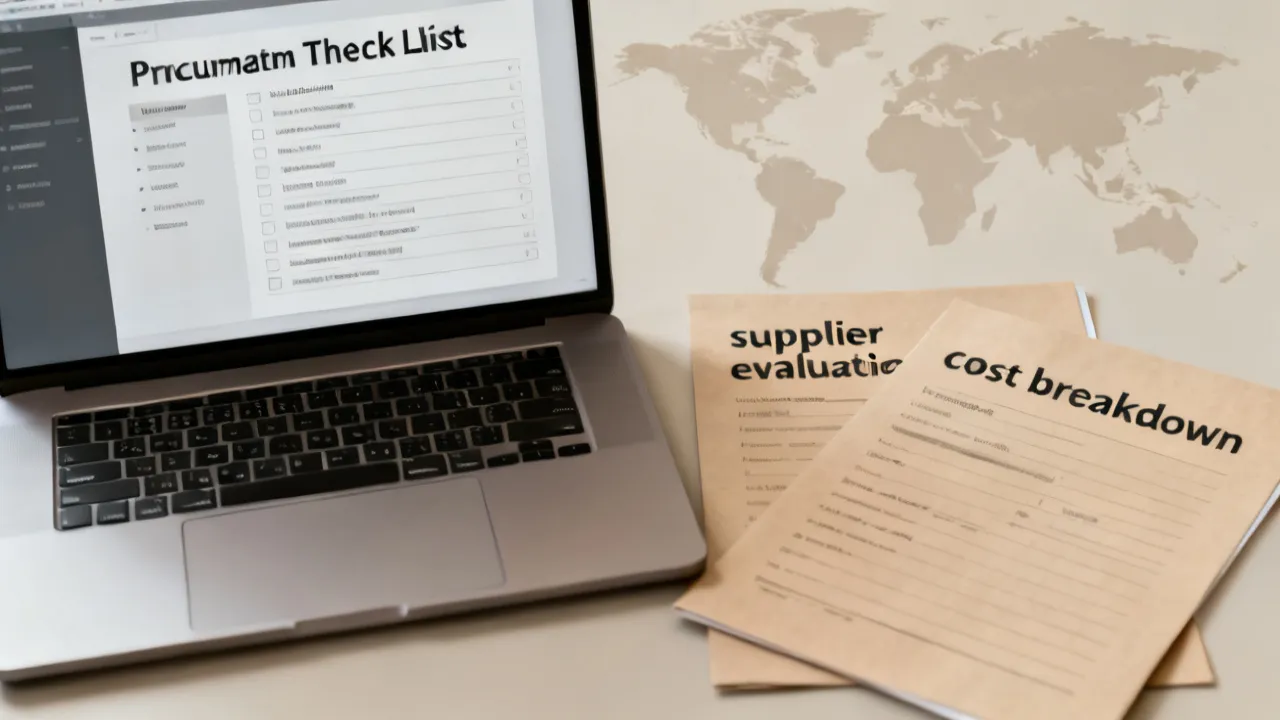
Understanding Cjcuxdixf and Cjcuxdixf Use-Cases
This guide explains how Cjcuxdixf is commonly discussed in industry contexts, what Cjcuxdixf-related workflows typically involve, and how to evaluate suppliers and pricing approaches responsibly. Objectively, it outlines background concepts around the keywords and highlights practical conditions readers should check before adopting a solution—without relying on unverifiable claims.

Key Takeaways on Cjcuxdixf and Related Keywords
At a practical level, Cjcuxdixf is best understood as a label that appears in procurement and operational discussions—often connected to how teams structure delivery, quality checks, and supplier coordination. If you are trying to make a decision based on the keywords you provided (including the placeholder-style strings shown alongside Cjcuxdixf), the most important step is to translate the term into concrete evaluation criteria: scope, expected output, verification methods, timeline fit, and contractual responsibilities.
Because the provided keywords appear in an incomplete or placeholder format (for example, multiple blank strings and repeated tokens around Cjcuxdixf), this article treats them as industry search terms rather than as fully specified product names. That approach keeps the analysis objective and focused on decision-making instead of guessing unsupported specifics. It also helps you avoid a common procurement error: assuming that a label used by a vendor automatically reflects a standardized offering, regulated compliance regime, or a widely recognized framework.
In other words, the “meaning” of Cjcuxdixf in a vendor pitch should not be inferred. Instead, the meaning should be decoded through questions, mapping, and evidence. If you follow a disciplined evaluation approach—one that ties every keyword mention to deliverables, artifacts, and acceptance tests—you end up with the same outcome you want from any well-run RFP: fewer surprises, clearer responsibilities, and a purchase decision you can justify internally.
Why “Cjcuxdixf” Shows Up in Supplier and Pricing Discussions
In many industries, tokens like Cjcuxdixf emerge as shorthand for a set of capabilities or an internal workflow step. When buyers research options, they often encounter terms embedded in vendor pages, RFP templates, documentation tags, or catalog-like listings. Even when the term is not self-explanatory, it can still function as a filter: it helps teams narrow down providers that claim relevant experience, tooling, or compliance readiness.
For procurement and operations teams, these tokens can be useful because they indicate that a vendor has organized their service delivery around repeatable steps. However, that usefulness has limits. A buyer cannot assume that the token corresponds to a single industry standard, a specific software module, or an identical process across multiple suppliers. Two suppliers may both mention “Cjcuxdixf,” yet implement it differently—using different acceptance criteria, different documentation, different escalation mechanisms, or different risk tolerances.
From an industry-expert perspective, the “value” of such a keyword is rarely the word itself; it is the requirements behind it. The keyword may be a tag for a workstream (for example, planning and execution, verification and sign-off, reporting and audit preparation), or it may represent a named deliverable (“Cjcuxdixf package,” “Cjcuxdixf report set,” or “Cjcuxdixf workflow”). It might also be a classification used internally by the vendor to manage scope.
Therefore, the safest route is to ask questions that clarify what the token means in practice—especially around deliverables, verification, and change management. If you cannot translate the token into a concrete chain of evidence, it should not drive your decision.
What an Objective Evaluation Should Look Like (Before You Compare Suppliers)
Whether you are comparing two suppliers or building a single shortlist, evaluation typically needs to be structured around verifiable criteria. For terms like Cjcuxdixf and other placeholder keyword strings you supplied, consider these decision dimensions. The key is that each dimension should be accompanied by an evidence request and a “what good looks like” statement.
- Scope clarity: What exactly is included under the “Cjcuxdixf” label? What is explicitly excluded? Are there assumptions that narrow or expand the scope?
- Evidence of capability: Can the supplier demonstrate prior work that maps to your desired outcomes? Are there case summaries, reference projects, samples, or anonymized deliverables?
- Quality assurance: What checks, acceptance criteria, audits, or peer reviews apply? Is quality built into the workflow, or is it bolted on at the end?
- Data handling and documentation: How are records stored, and what artifacts are delivered? Are there standardized templates? Do they support your governance needs?
- Timeline realism: Are estimates based on a comparable project model? Do they identify lead times, dependencies, and constraints?
- Change control: How are scope adjustments handled contractually? What triggers change orders? How are costs and timelines renegotiated?
- Total cost visibility: How is pricing structured (e.g., fixed deliverable, time & materials, phased milestones)? Are cost drivers documented?
- Compliance and security readiness (if applicable): Do they meet relevant compliance frameworks, data protection requirements, and audit obligations?
- Operational fit: How does the supplier’s process integrate with your existing tools, stakeholders, and decision cadence?
- Termination and continuity: What happens if the engagement ends early? How do they provide handover artifacts and transition support?
Critically, avoid decisions based solely on keyword presence. A provider can mention Cjcuxdixf while implementing a process that does not match your constraints. Conversely, a provider might not mention the token explicitly but may deliver an equivalent workflow under a different name. Your evaluation should compare outcomes and evidence, not vocabulary.
To operationalize this principle, you can design an evaluation rubric where each keyword mention triggers a due diligence question. For example: if a proposal says “Cjcuxdixf ensures quality verification,” require them to specify the verification steps and provide sample artifacts.
Pricing Approaches You May Encounter When “Cjcuxdixf” Is Referenced
Pricing information was not explicitly provided in your prompt, so this section focuses on pricing models commonly used when vendors market a capability under a keyword-like label (such as Cjcuxdixf). The goal is not to claim which model is “best,” but to describe how buyers typically encounter pricing patterns and how to evaluate them fairly.
In practice, teams often see one of these approaches:
- Milestone-based pricing: Payment is tied to defined deliverables and acceptance tests. Each milestone has a scope description, a sign-off method, and a date or dependency condition.
- Scope-based fixed pricing: A defined set of outputs with limited change tolerance. Fixed price can work well when requirements are stable and acceptance criteria are unambiguous.
- Time & materials (T&M): Used when requirements are evolving; often requires tighter governance to avoid cost drift. T&M may be paired with weekly planning cycles, timesheet reporting, and budget caps.
- Subscription or retainer: Top for ongoing support or recurring execution. Retainers require clarity on response times, service levels, and the boundaries of what the retainer covers.
- Hybrid models: Base fee plus usage or performance-related components. Hybrid models can combine predictability with flexibility, but you must map variable fees to measurable triggers.
- License or platform fees (if software is involved): If “Cjcuxdixf” ties to tooling, you may see separate software licensing, implementation fees, and support subscriptions.
An objective strategy is to request a pricing breakdown that maps directly to the evaluation criteria above. If the supplier cannot explain how cost relates to deliverables and verification, buyers should treat the quotation as insufficiently transparent. In many cases, lack of transparency hides one of two issues: either scope is unclear, or the supplier is bundling different work types into a single undifferentiated fee.
To normalize pricing between vendors, ask each supplier to provide a consistent structure: deliverables list, associated effort assumptions, acceptance criteria, and a schedule of payments tied to verification. If one quote is milestone-based and another is T&M, request a comparable breakdown using their own assumptions (for example, “translate milestone set into expected effort per phase”).
Also consider “risk pricing” in the quote. If the supplier charges a premium for handling uncertainties, you should ask what uncertainties they assume and how they plan to reduce them. That turns pricing into a negotiable, explainable element rather than a black box.
Supplier Selection: What “Good Fit” Usually Means for Cjcuxdixf-Style Work
When a keyword like Cjcuxdixf is used as shorthand, a “good fit” supplier typically demonstrates not only that they have experience, but that they have a delivery system that you can trust. A good fit is usually visible in four areas: comparable execution, clear ownership, documented process, and measurable acceptance.
- Comparable execution: They have handled similar complexity and constraints. “Comparable” means not just the same industry, but similar scope boundaries, similar stakeholders, and similar verification needs.
- Clear ownership: Who is accountable for quality, timelines, and issue resolution? Named roles and escalation contacts are a strong signal of operational maturity.
- Documented process: They follow a repeatable method rather than ad hoc work. A documented process includes templates, checklists, review cadence, and decision points.
- Measurable acceptance: Deliverables are tied to acceptance criteria and evidence. They should describe what “done” means and how you will validate completion.
- Risk management: They surface dependencies early and propose mitigations. Look for risk registers, dependency lists, and realistic timeline buffers.
- Stakeholder management: They know how to coordinate internal and external stakeholders, including how they collect requirements, run reviews, and capture sign-off.
- Change control discipline: They can handle scope changes without chaos. They should explain how they prevent scope creep and how they document approvals.
- Handover readiness: They produce transition-ready artifacts, including documentation and runbooks, so that your internal team can operate or maintain the work.
Even without the full context of what Cjcuxdixf refers to in your specific use-case, these principles are widely applicable across procurement and service delivery environments. They reflect the reality that keywords are often insufficient substitutes for operational clarity.
In practice, “good fit” also means cultural fit and governance fit. For example, if your organization has strict change-control requirements and requires formal sign-off gates, a supplier that prefers informal decisions may create friction. Conversely, if your organization expects fast iteration and light documentation, a supplier that insists on heavyweight governance may slow you down. Good fit is the alignment of processes on both sides.
Background Context: Interpreting the Provided Keywords Responsibly
Your keyword set includes multiple blank or placeholder segments and then the token Cjcuxdixf. Since the prompt does not specify meaning, product identity, or an associated location, it would be speculative to claim that these keywords correspond to a particular brand, standard, or technology.
Instead, an objective approach is to treat the terms as search queries or classification strings used during discovery. In that framing, the goal of the guide is to help you:
- Translate keyword mentions into concrete requirements.
- Compare suppliers using evidence, not only terminology.
- Apply conditions and due diligence before commitment.
- Protect your organization from misinterpretation and unrealistic vendor claims.
This method reduces the risk of misalignment and prevents decision-makers from relying on ambiguous or incomplete labeling. It also helps with internal governance: you can document that your evaluation was criteria-based and evidence-based, not keyword-driven.
Another advantage of this approach is flexibility. If a supplier uses different naming conventions or does not mention Cjcuxdixf directly, you can still evaluate them against the same underlying criteria. That prevents the procurement process from becoming a “keyword matching” exercise, which can lead to poor outcomes.
Comparison Table (Criteria, Source Basis, and Practical Conditions)
The following comparison table is designed to help you structure due diligence when a supplier references Cjcuxdixf or related keyword strings. It avoids links and focuses on verifiable decision criteria. The table is deliberately “process-centric,” because in procurement contexts the token’s real value is what it represents in the delivery chain.
| Evaluation Area | How to Compare Using “Cjcuxdixf” Mentions | Source Basis (General Standards and Practices) | Conditions / Requirements to Verify |
|---|---|---|---|
| Scope Definition | Ask the supplier to translate “Cjcuxdixf” into deliverables, boundaries, and exclusions. | Common RFP and SOW top practices used across procurement disciplines. | Written scope statement; documented assumptions; signed change control process. |
| Quality Assurance | Request acceptance criteria and evidence artifacts linked to the “Cjcuxdixf” workflow. | Quality management concepts aligned with widely used process frameworks (industry practice). | Defined pass/fail criteria; documented review cadence; escalation path. |
| Pricing Transparency | Map costs to steps inside the “Cjcuxdixf” deliverable chain (not just overall totals). | Procurement transparency practices; milestone and T&M governance principles. | Line-item breakdown; cost drivers; rates and assumptions; clear invoicing terms. |
| Documentation & Records | Confirm what documents are produced when “Cjcuxdixf” is executed (reports, logs, runbooks). | Auditability requirements often appear in regulated environments and mature operations. | Document retention policy; versioning approach; handover package definition. |
| Risk & Dependencies | Ask how the supplier identifies dependencies and manages issues during “Cjcuxdixf” work. | Project risk management practices; dependency tracking norms. | Risk register; named owners; mitigation plan; timeline buffers rationale. |
| Data Handling (If Applicable) | Clarify what data flows are involved under “Cjcuxdixf” and who accesses what. | Information governance practices common in modern procurement. | Data processing terms; access controls; breach notification responsibilities. |
| Governance & Decision Cadence | Request the governance model: who reviews what, how often, and how decisions are recorded. | Operational governance principles used across enterprise delivery programs. | Meeting cadence; decision logs; escalation triggers; RACI-style role clarity (if requested). |
| Change Control | Ask for the formal process for scope changes that affect “Cjcuxdixf” deliverables. | Contract lifecycle management and change governance best practices. | Written change request format; approval workflow; documented impact assessment (time/cost/scope). |
This expanded table adds two additional areas—governance and change control—because many procurement failures happen when “delivery work” is not the main risk; rather, the risk is how decisions are made and how changes are approved.
Source Notes (Reliability and Non-Exaggeration)
Because the prompt does not include explicit industry statistics, this article avoids unverifiable performance claims. Where general practices are referenced, they reflect widely used procurement and quality management approaches found across professional guidance.
For readers who want to validate procurement and risk governance further, reputable starting points include:
- Project management and quality management guidance published by recognized standard bodies.
- Procurement governance principles widely adopted in enterprise RFP practice.
- Information security governance documentation and privacy frameworks where data processing is involved.
If you tell me your specific industry (e.g., logistics, IT services, manufacturing, healthcare operations), I can align the criteria and terminology more precisely to that domain. In many industries, the “shape” of acceptance criteria and documentation expectations changes dramatically, even when the keyword token looks similar.
Step-by-Step Guide: How to Operationalize “Cjcuxdixf” in a Decision Process
Below is a practical, step-by-step approach that translates keyword research into a structured buying process. It is written to work even when Cjcuxdixf is not fully defined publicly. The guiding idea is simple: if you can’t verify it, you can’t buy it responsibly.
-
Define your outcome first:
Write down what “success” means in your context (time saved, reduced defect rates, improved compliance posture, faster throughput, fewer incidents, higher audit readiness, etc.). Keep it measurable.
To make this step more operational, create a short list of metrics and a baseline (current state). Without a baseline, “Cjcuxdixf” claims can be impossible to evaluate objectively.
-
Request a “keyword-to-deliverables” mapping:
Ask the supplier to explain what activities occur under “Cjcuxdixf,” what outputs are produced, and what is excluded.
Require them to provide this mapping in a structured format (for example, a table) that includes deliverable names, descriptions, and evidence artifacts. This prevents vague narrative responses and makes comparisons easier.
-
Set acceptance criteria:
Define evidence that will confirm completion—reports, test results, sign-off procedures, or other artifacts.
Acceptance criteria should include both content requirements (what must be present) and process requirements (how it must be reviewed and approved). Where possible, define acceptable tolerances and thresholds.
-
Audit quality controls:
Determine how reviews are performed, how defects are handled, and how changes are approved.
Ask how quality checks are recorded and how nonconformities are resolved. Quality control should be described as a workflow with roles and timelines, not as a general statement like “we ensure quality.”
-
Normalize pricing comparisons:
Ensure pricing is normalized by scope and deliverables. If one quote is milestone-based and another is T&M, request a comparable breakdown.
When requesting normalization, ask each supplier to estimate effort by phase and map it back to deliverables and acceptance evidence. Then check whether their assumptions align with your timeline constraints and internal resource availability.
-
Assess capability fit:
Verify prior experience relevant to your complexity and constraints. Request case summaries that mirror your requirements.
Do not accept only “we have done similar work.” Require evidence of comparable deliverable structures, comparable acceptance mechanisms, and comparable governance settings.
-
Run a controlled pilot or proof of concept:
If appropriate, define a limited engagement with clear success criteria before scaling.
A pilot should test assumptions about communication cadence, change handling, documentation quality, and acceptance readiness—not just output quantity. Include a “go/no-go” decision gate at the end of the pilot.
-
Finalize contractual requirements:
Lock in deliverables, change control, confidentiality/data handling responsibilities, and service-level expectations (if applicable).
Ensure the contract aligns with the evidence expectations you established earlier. If the contract does not require certain artifacts, suppliers may not prioritize producing them unless there is an enforcement mechanism.
You can further improve this process by adding two checkpoints: (1) an internal alignment session among stakeholders to confirm how “done” will be validated, and (2) a final commercial/contract review to confirm that pricing and acceptance criteria map cleanly.
Conditions and Requirements to Include in Your RFP (Cjcuxdixf Use-Cases)
When you issue an RFP or conduct supplier assessment, consider including conditions that prevent ambiguity. For the keyword Cjcuxdixf, the essential requirement is that the supplier can operationalize it into deliverables with evidence.
Below are recommended conditions you can incorporate. They are written in a way that remains applicable even if you do not fully know what Cjcuxdixf refers to until the supplier explains it.
- Written deliverables list: Every “Cjcuxdixf” mention must tie to tangible outputs (documents, data extracts, configurations, test results, audit logs, runbooks, training materials, etc.).
- Evidence and sign-off: Acceptance criteria must be defined before work begins, with clear sign-off ownership (your team vs theirs).
- Transparent assumptions: Dependencies on your internal team, systems, or data must be listed. Require assumptions to be explicit and confirmable.
- Change control: Scope changes must follow a documented approval route. Include how cost and timeline impacts are calculated.
- Confidentiality and governance: Data handling responsibilities should be explicit (if any data flows are involved). Include retention, deletion, and access control expectations.
- Issue escalation: Define who is contacted first, response time expectations, and escalation triggers. Include what constitutes an urgent issue.
- Documentation format requirements: Specify whether deliverables must be provided in particular formats (PDF, editable documents, spreadsheets, dashboards, ticket exports, structured logs, etc.).
- Versioning and audit trail requirements: If the work results in artifacts used later, require version control and an audit trail for changes.
- Handover and continuity: Define what handover package must be delivered at closeout and whether transition support is required.
Notice that these requirements focus on controlling the procurement risk. In procurement, the risks are usually predictable: scope ambiguity, acceptance dispute, unclear responsibilities, missing artifacts, and unmanaged changes. When you write your RFP conditions to address those risks, “Cjcuxdixf” becomes a doorway into operational clarity rather than a vague promise.
Industry Perspective: How Experts Reduce “Keyword Ambiguity” Risk
From an expert standpoint, one common failure mode is equating keyword presence with capability certainty. When terms like Cjcuxdixf appear without definition, experienced teams counteract that uncertainty by requiring:
- Structured response templates: Suppliers fill in sections tied to scope, deliverables, and evidence. Narrative responses are allowed, but they must be anchored to structured outputs.
- Governance artifacts: Plans, risk registers, acceptance checklists, and handover documents. These artifacts act as proof that delivery is managed rather than improvised.
- Traceability: A requirement-to-deliverable matrix that shows how each output supports the outcome. Traceability makes it easier to assess completeness.
- Governed pricing: Cost drivers linked to phases and verification milestones. If pricing is not tied to verification, it becomes difficult to evaluate fairness.
- Demonstrations or samples: Even a small sample can reveal whether a supplier truly understands your acceptance needs. If you cannot request a full sample, request an anonymized artifact that demonstrates formatting, completeness, and evidence type.
This reduces the likelihood that the chosen supplier is aligned to the label but not aligned to your actual operational need. It also protects you during internal reviews: decision-makers can see a documented chain connecting what was bought to how it will be verified.
Another expert tactic is to separate “discovery” from “commitment.” Many teams mistakenly treat early marketing language as a promise. Instead, experts require that the supplier’s process be validated during early phases (discovery, design, pilot) before final commitment. That way, Cjcuxdixf is validated with evidence rather than treated as a single statement.
Potential Applications (Conceptual Use-Cases)
Because the prompt does not specify a concrete domain for Cjcuxdixf, the use-cases below are presented conceptually. The purpose is to help readers think in patterns rather than guess the exact meaning. In other words, these are not claims about what “Cjcuxdixf” is; they are patterns for what a keyword token often represents in procurement.
- Operational workflow definition: A supplier delivers a structured process described in documentation and validated through acceptance criteria. In this use-case, “Cjcuxdixf” could indicate a standardized workflow set.
- Service delivery standardization: “Cjcuxdixf” acts as a named workflow used to align cross-team execution. Here, the deliverable might be training materials, procedure documentation, and evidence of adherence.
- Governance and quality alignment: The keyword identifies a set of checks, verification steps, and review cadence. Deliverables could include checklists, audit logs, and sign-off forms.
- Procurement categorization: The term is used to categorize scope so procurement teams can compare offers more consistently. In that case, your evaluation must translate the category into actual deliverables, not just category names.
- Regulatory or audit readiness support (if applicable): The keyword may relate to audit workflows such as evidence collection and traceability. Deliverables could include audit-ready reports and traceability matrices.
If your organization can describe the expected artifact types (for example, “we need evidence that the process was followed,” “we need audit-ready documentation,” or “we need test results”), you can dramatically improve the reliability of your evaluation.
FAQs
1) What does “Cjcuxdixf” mean?
In many contexts, Cjcuxdixf functions as a label or classification token used during research and procurement. Because your prompt does not provide a formal definition, the safest approach is to ask suppliers to map the term to deliverables, process steps, and acceptance criteria. Treat it as a starting point for discovery rather than a final specification.
2) How should I compare suppliers if pricing and scope are unclear?
Request a deliverables breakdown and a cost-driver explanation tied to the Cjcuxdixf workflow. Then normalize comparisons by scope and milestone structure. If one quote is time & materials, ask for estimates supported by assumptions and conversion to milestones. Also request a deliverable-to-pricing mapping so you can see what you pay for and what evidence you receive.
3) What due diligence should I require for Cjcuxdixf-related work?
Require written scope, acceptance criteria, evidence artifacts, change control, and documented quality assurance. If any data handling is involved, include data processing responsibilities and governance requirements. For high-stakes work, also require samples and a pilot to validate that the supplier’s interpretation of “Cjcuxdixf” aligns with your operational needs.
4) Can I rely on keyword mentions alone?
No. Keyword mentions (including Cjcuxdixf) should be treated as a starting point for discovery. Decision-makers should verify capability through documented process descriptions, evidence of past performance, and clear deliverables aligned to your outcomes. Use keywords to find candidates, not to select suppliers without verification.
5) Is there a recommended process for internal stakeholders to align on the decision?
Yes. Use the step-by-step guide in this article: define outcomes, request keyword-to-deliverables mapping, set acceptance criteria, normalize pricing, then pilot or validate through a controlled engagement before full commitment. Additionally, run a short internal alignment session to confirm who will approve acceptance and what artifacts they expect to receive.
6) What if my specific “Cjcuxdixf” request is tied to a location?
Your prompt did not include a specific city or country. If location matters in your case, share the location details and the industry; I can tailor evaluation conditions to local operational norms, documentation expectations, and typical procurement practices. If you have constraints like local staffing requirements, data residency, or specific regulatory regimes, those should be included as RFP requirements.
7) Are there any common red flags in Cjcuxdixf-related proposals?
Common red flags include vague scope, absence of acceptance criteria, pricing that cannot be tied to deliverables, unclear quality controls, and lack of transparency about assumptions or dependencies. Other red flags include missing escalation paths, no documentation format commitments, and unclear change control terms (for example, “we’ll adjust as needed” without a formal mechanism).
8) Where can I validate industry claims?
Prefer supplier documentation backed by verifiable case evidence and rely on recognized governance and quality guidance from standard-setting or professional bodies. Avoid accepting performance claims without methodology and evidence. When possible, request at least one anonymized artifact sample or a walk-through of a completed engagement that mirrors your scope.
9) What should I ask the supplier if “Cjcuxdixf” is described only in marketing language?
If Cjcuxdixf is described only in marketing language, ask for an implementation view: “Which steps occur under this label?” “What documents or evidence are produced at each step?” “How do you verify completion?” “Who signs off?” “What is the expected turnaround time for each phase?” “How do you handle deviations?” Then request samples or a pilot deliverable.
10) What if two suppliers use different terminology for what seems like the same workflow?
That is common. Compare the underlying deliverables, evidence artifacts, acceptance criteria, and change-control approach rather than the keyword label. Build a mapping between their proposed steps and your requirement-to-deliverable matrix. If you can’t map both suppliers to the same acceptance evidence, that gap itself is informative and may be a sign that their processes are not truly equivalent.
Conclusion: Turning “Cjcuxdixf” Keywords Into Confident Decisions
When your research surfaces Cjcuxdixf alongside other placeholder keyword strings, the top path is to treat the terminology as an entry point, not a guarantee of capability. By converting the label into deliverables, evidence, acceptance criteria, and transparent pricing structures, you create a procurement process that is fair to suppliers and grounded in verifiable outcomes.
The strongest procurement advantage you can build here is discipline: do not select based on the presence of a token. Select based on what the token unlocks in terms of documented process, measurable acceptance, traceable deliverables, and a governance model that matches your organization’s risk tolerance.
If you share the industry, the intended deliverable, and any actual supplier names or price ranges you encountered, the guide can be rewritten into a more domain-specific version—still objective, SEO-friendly, and aligned to your exact decision context. The key remains the same: turn keywords into evidence, and evidence into a decision you can defend.
-
1

A Guide to Cost-Efficient Small Electric Cars for Seniors
-
2
Mastering Debt Consolidation: Boost Your Credit Score and Manage Interest Rates
-
3
Your Guide to Loans, Credit Checks, and Interest Rates
-
4
Affordable Independent Living: Finding the Right Senior Housing
-
5
Guide to Senior Living Apartments: Affordable and Comfortable Environments