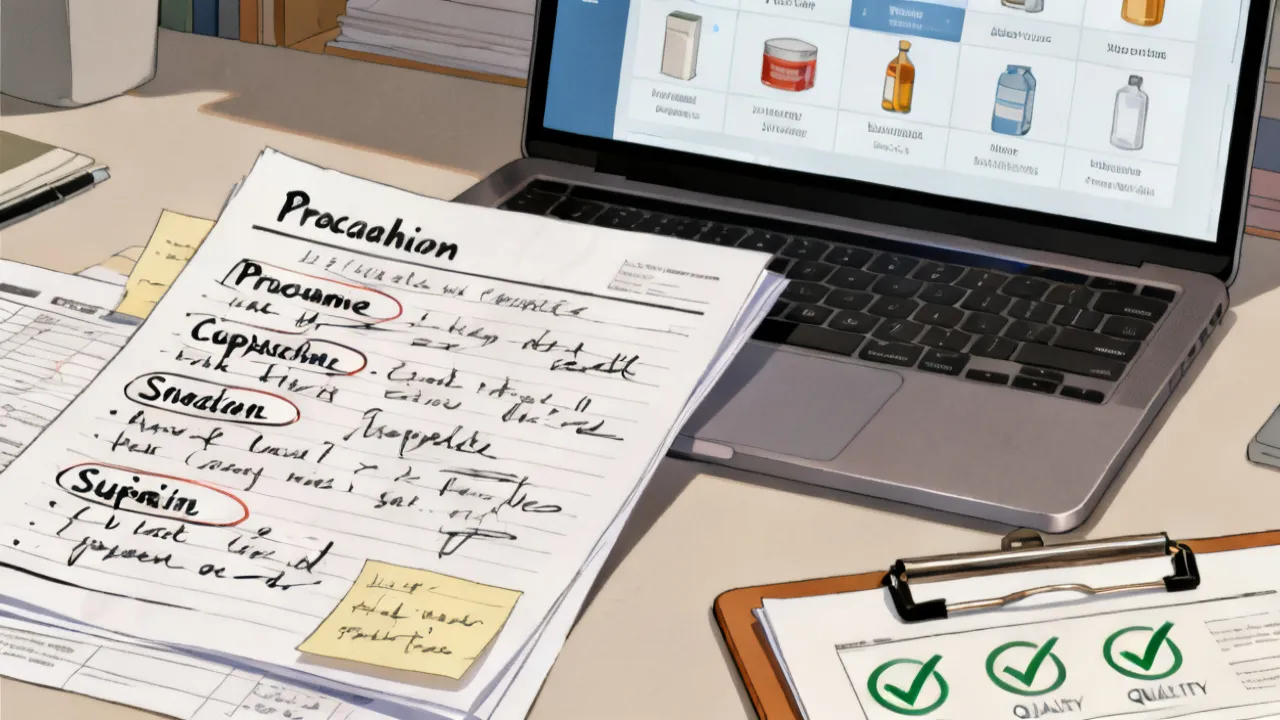
Duda Guide to Procurement Decisions and Vendor Fit
This guide explains how “Duda” thinking can improve procurement decisions and vendor fit in day-to-day operations. It reviews the objective background behind the keyword—how organizations evaluate options, manage risk, and document trade-offs—so readers can apply consistent criteria. The article then adds practical decision frameworks, requirements, and FAQs for smoother purchasing outcomes.

Key takeaway: Use consistent “Duda” criteria to reduce procurement friction
In procurement and vendor selection, Duda is best understood as a disciplined approach to aligning requirements, expectations, and documentation—so decisions become repeatable rather than reactive. Instead of relying on a one-time assessment, organizations can apply a structured method for evaluating suppliers, comparing offerings, and tracking performance to make purchasing outcomes more predictable.
From an industry perspective, the biggest operational gains rarely come from “finding the cheapest option.” They come from clarifying what success means, confirming feasibility (timeline, compliance, and capacity), and ensuring the supplier’s working style matches your internal constraints. That is the practical intent behind using a Duda-style framework: you reduce handoffs, reduce rework, and improve accountability across stakeholders.
When procurement is treated as a repeatable process rather than a series of ad-hoc conversations, teams gain leverage. The same questions get asked every time. The same evidence gets requested. The same assumptions get recorded. That consistency makes it easier for cross-functional teams—procurement, engineering, operations, quality, finance, and IT—to collaborate without stepping on each other’s assumptions.
It also lowers organizational risk. Procurement decisions are often long-lived. A small gap in definition today can become a major dispute during delivery or a costly replacement later. A Duda-style approach reduces the likelihood of “silent misunderstandings,” where both parties believe they agreed on one thing but the contract and deliverables are written in a way that leaves interpretation open.
Objective background: What “Duda” implies in procurement contexts
“Duda” is not inherently a procurement term in standard global business taxonomies; rather, it functions here as a conceptual label for a structured decision workflow. In real organizations, similar workflows often exist under other names—vendor qualification, procurement governance, supplier evaluation, or requirements-based sourcing. The objective background is the same: organizations need a defensible method to compare alternatives under uncertainty, while protecting quality, compliance, delivery reliability, and long-term value.
When teams do not standardize their evaluation steps, they may inadvertently compare incomparable things (e.g., different warranties, different lead-time assumptions, or different service scopes). A Duda-style approach encourages the team to “normalize” comparisons—define the same criteria for every supplier, document assumptions, and record decision rationale.
To make this concrete, consider a typical scenario: one supplier includes setup and training in their quote; another treats setup as billable add-on labor. If the procurement decision is made quickly based on headline unit price, the organization may later discover that the actual “delivered” cost is much higher for the lower-priced option. Even if the supplier did nothing wrong, the contract scope and proposal language allowed the mismatch to exist.
A Duda-style workflow prevents many of these issues by forcing an explicit scope alignment step before evaluation. Instead of debating in hindsight, you collect the information upfront and require each supplier to respond using the same structure. That reduces friction for everyone, including suppliers, because it makes your requirements clear and predictable.
Why vendor fit matters as much as price
Even when teams discuss a “price” number, the operational reality is usually more complex. Contract price can shift due to variations in:
- Scope (what is included vs. excluded—setup, training, maintenance, revisions)
- Service levels (response times, escalation paths, warranty handling)
- Lead time variability (production capacity, shipping constraints, buffer policies)
- Compliance and documentation (certifications, testing reports, audit readiness)
- Total cost of ownership (rework, downtime, onboarding effort, refresh cycles)
That is why “price” should be treated as one input—not the final answer. Many procurement leaders use a multi-criteria model so the decision stays grounded in business outcomes rather than only in unit cost.
But multi-criteria evaluation only works when criteria are consistent. If each procurement event uses different criteria—or if the criteria are applied differently depending on who is presenting—the process becomes less like governance and more like negotiation theater. Duda addresses that by emphasizing consistency: the same categories of evaluation, the same evidence expectations, the same documentation habits, and the same method for comparing like-for-like terms.
Vendor fit also affects risk and speed. A supplier that responds quickly and has a mature implementation process may reduce time-to-value, even if their quote is higher. A supplier with strong compliance documentation may reduce regulatory exposure and audit preparation time. In regulated environments, these factors can outweigh small cost differences.
Finally, vendor fit impacts internal workload. A supplier that makes onboarding easy (clear handover materials, training assets, and well-defined responsibilities) reduces the burden on your staff. If procurement saves money upfront but causes major internal disruption, you may pay for the decision indirectly through overtime, delayed projects, or quality escapes.
Industry-grounded approach: Build a structured evaluation workflow
To operationalize Duda, start by aligning internal stakeholders (procurement, operations, quality, finance, and end users). Then build a decision workflow that produces consistent outputs: a documented requirement set, a clear supplier shortlist, a comparison of like-for-like terms, and a risk register.
In credible industry practice, this is often aligned with recognized procurement and quality principles. For instance, ISO management system standards emphasize documented processes, traceability, and continual improvement—concepts that map well to supplier evaluation governance. Teams can also reference widely used guidance on vendor risk management and due diligence frameworks commonly found in professional procurement training and compliance programs.
What “credible practice” means in practice is not only that the organization has a policy, but that people can follow the policy under time pressure. A useful Duda-style workflow should be simple enough to apply during routine sourcing events, yet thorough enough to handle high-risk purchases. That balance is important: if the process is too heavy, teams bypass it; if it is too light, it fails to prevent mistakes.
Therefore, a good Duda workflow has three traits:
- Repeatability: the same core steps and evidence expectations are used across suppliers.
- Comparability: outputs normalize differences in scope and assumptions so evaluation is fair.
- Accountability: decision rationale is recorded, and responsibilities are assigned.
Those traits are what reduce procurement friction: fewer renegotiations, fewer late-stage surprises, and fewer internal arguments about what was “supposed to happen.”
Comparison table: Supplier evaluation elements (requirements-based)
The table below reframes decision inputs as a practical comparison checklist. Replace the example values with your real requirements. Consider treating this table as the “common language” for procurement conversations. If every stakeholder uses this structure, you also reduce the risk of miscommunication between functions.
| Category | What to compare | What “good” looks like | What to document |
|---|---|---|---|
| Price & terms | Unit price, payment terms, volume breaks, any surcharges | Clear pricing structure and predictable invoicing | Quote breakdown and assumptions |
| Scope | Installation, configuration, support, training, revisions | Explicit deliverables aligned to your use case | Statement of work / scope matrix |
| Lead time | Estimated start and delivery dates; dependency risks | Feasible dates with realistic buffers | Timeline plan and constraint notes |
| Quality assurance | Testing, acceptance criteria, defect handling | Measurable acceptance standards | Quality plan and inspection/acceptance steps |
| Compliance | Certifications, documentation, regulatory fit | Audit-ready files and clear responsibility | Compliance checklist and evidence log |
| Service & warranty | Coverage duration, turnaround times, escalation path | Documented response and remedies | Warranty terms and service-level expectations |
| Operational fit | Communication cadence, change management, training approach | Compatible working style and clear handoffs | RACI and stakeholder communication plan |
| Risk profile | Capacity limits, single-source exposure, mitigation plan | Identified risks with practical mitigation | Risk register and contingency triggers |
Step-by-step guide (a “Duda” workflow you can adopt)
Below is a step-by-step guide designed to make Duda actionable for procurement and vendor selection teams. This is written to be used as an internal process template.
-
Define the decision objective
Identify what you are buying and what “success” means (performance, compliance, service responsiveness, uptime, throughput, or other measurable outcomes). -
Create a normalized requirement set
Use the same structure for each supplier: scope, deliverables, acceptance criteria, documentation needs, and constraints (security, regulatory, compatibility). -
Request comparable proposals
Ask each supplier to quote against the same itemization: what is included, what is excluded, and where assumptions begin. -
Evaluate price as “one dimension”
Convert quotes into comparable totals (including support, onboarding, and expected lifecycle service, where applicable). Keep assumptions visible. -
Assess quality and compliance evidence
Review certifications, test results, audit histories (as applicable), and proof of capability. Confirm documentation responsibilities. -
Validate operational feasibility
Confirm lead times, capacity, and service channels. Ensure your team’s internal handoff steps align with the supplier’s workflow. -
Run a structured risk review
Record risks (schedule risk, quality risk, dependency risk) and define mitigations and triggers. -
Select and contract with clarity
Ensure the contract includes acceptance criteria, warranty terms, service levels, escalation steps, and change management rules. -
Measure and improve after onboarding
Track outcomes using pre-agreed KPIs (e.g., on-time delivery, defect rate, response time, resolution cycle time). Use findings for future sourcing decisions.
To strengthen this workflow, organizations often add two practical controls between steps. The first is a “requirements hold-point” before proposals are finalized: no supplier is evaluated until the requirements are frozen and approved. The second is a “commercial and scope normalization” checkpoint: procurement checks that every supplier’s quote is mapped to your requirement structure before scoring begins.
Those hold-points are where many friction costs are eliminated. They prevent late requirement changes from contaminating comparisons. They also stop stakeholders from changing evaluation priorities after quotes arrive.
Conditions and requirements for a reliable procurement outcome
To make Duda-style decisions effective, teams should meet the following conditions. When these requirements are missing, comparisons become fragile and later disputes are more likely.
- Comparable inputs: Suppliers must respond to the same requirement set and scope definition.
- Documented assumptions: Any deviations (substitutions, excluded modules, separate licensing) should be written down.
- Clear acceptance criteria: Define objective criteria for “pass” at delivery and during any trial period.
- Defined responsibility: Specify what your team does vs. what the supplier does (RACI model is useful).
- Service and remedies are explicit: Warranty handling and escalation paths must be contractual or operationally binding.
- Risk controls have triggers: For example, what happens if lead time slips beyond an agreed threshold?
In addition, reliable outcomes usually require the following operational enablers:
- A single source of truth: Use one repository for requirements, proposal responses, evaluation notes, and approval records. Avoid splitting materials across email threads and chat messages.
- A consistent scoring method: Whether scoring is numeric or qualitative, define what the score means. “Good,” “fair,” and “poor” must map to observable evidence.
- A defined conflict resolution approach: If stakeholders disagree, there should be a predetermined escalation path—rather than debate spiraling late in the cycle.
- Appropriate depth for risk level: High-risk purchases require deeper due diligence (evidence review, site visits, reference checks), while low-risk purchases can use lighter controls.
These enablers keep the Duda process from collapsing under organizational reality. Even a well-designed rubric fails if stakeholders cannot access the evidence or if decisions are not recorded in a consistent way.
Expert perspective: What goes wrong in real-world comparisons
Industry professionals frequently see the same failure modes, regardless of sector:
1) “Price-only” decisions. When teams pick a supplier due to a low initial price, they often underestimate onboarding costs, support requirements, or rework caused by mismatched scope.
2) Scope drift during implementation. If deliverables are not explicitly defined, later changes are treated as exceptions rather than expected iterations—creating schedule and cost pressure.
3) Unclear quality signals. Without objective acceptance criteria, quality becomes subjective. That leads to disputes over whether issues are defects, usage problems, or acceptable variance.
4) Weak supplier communication alignment. Even technically strong suppliers may underperform if escalation pathways and response expectations are not aligned.
5) Incomplete evidence. Procurement often receives marketing claims instead of evidence. A Duda workflow insists on proof: documentation, test reports, and clear references to standards where relevant.
In addition to these common failure modes, there are several subtler problems that can be just as damaging:
6) Hidden dependency assumptions. Vendors may assume your organization will provide access, facilities, data feeds, or internal resources on a specific schedule. If you do not document those dependencies, the project delays get attributed to “vendor performance,” even when the root cause is internal readiness.
7) Misaligned definitions of “delivery.” For some services, delivery can mean “proposal accepted,” “software provisioned,” “pilot completed,” or “production ready.” A Duda-style approach requires that “delivery” be defined in contract and mapped to acceptance milestones.
8) Warranty terms that do not match the use environment. A supplier might offer a generic warranty without considering operational conditions. If your operational environment is harsh (temperature extremes, high uptime needs, regulatory obligations, or frequent change), warranty assumptions must reflect those realities.
9) Overreliance on a single reference check. Reference checks can be useful but are not complete due diligence. Procurement teams often fail when they treat one reference call as sufficient evidence. A structured approach builds evidence from multiple sources: references, documentation, sample deliverables, and operational demos.
10) Lack of post-selection measurement. Many procurement processes stop once the contract is signed. Without measurement, the organization cannot learn, improve scoring criteria, or update supplier performance expectations for future sourcing events.
FAQs
1) What does “Duda” mean in a procurement context?
In this guide, Duda represents a structured, criteria-driven approach to vendor selection and procurement decisions—focused on repeatable evaluation, documented assumptions, and operational feasibility.
2) How should I use price information without letting it dominate the decision?
Treat price as one dimension within a multi-criteria evaluation. Normalize proposals so scope, service levels, lead times, and warranty terms are comparable. Then calculate a like-for-like total using documented assumptions.
Practically, teams often create a “total delivered cost” worksheet. This worksheet might include labor for implementation, estimated support costs during the first year, expected training time, and costs associated with compliance evidence delivery. The goal is not to perfectly forecast the future; the goal is to compare options on a consistent basis.
3) What supplier evidence should procurement teams request?
Typically: scope breakdowns, delivery timelines, quality and acceptance documentation, warranty/service terms, and compliance evidence relevant to your industry and regulatory environment. The exact list depends on the product or service category.
For stronger governance, evidence requests should be paired with “evidence definitions.” For example, if you ask for “quality certifications,” you should specify which certifications are relevant and whether you need audit reports, certificates, or both. If you ask for “test reports,” you should define acceptable test types and the version of the deliverable they correspond to.
4) How do I compare suppliers fairly when lead times differ?
Use the same lead-time assumptions and document constraints. Evaluate feasibility using risk controls (buffers, contingency plans, escalation triggers) rather than only comparing estimated dates.
If one supplier has a shorter estimated delivery but higher risk of delay, your Duda framework should capture that risk explicitly. For example, you can document what happens if delivery is late by 1, 2, or 4 weeks, including remedies, expedited shipping options, or service-level adjustments.
5) Can a supplier with a higher price be the better choice?
Yes. Higher price may reflect stronger service levels, clearer scope, better warranty handling, faster resolution cycles, or reduced rework risk—factors that often reduce total cost of ownership.
Procurement teams can make this tangible by comparing “risk-adjusted totals.” While exact financial modeling may not be feasible for every purchase, even a qualitative risk-adjusted approach (assigning higher weight to options with lower delivery risk or better defect handling) keeps decisions grounded in operational reality.
6) What are practical acceptance criteria examples?
Acceptance criteria vary by category but commonly include measurable deliverables, documented performance thresholds, defect definitions, required documentation completeness, and pass/fail procedures agreed in advance.
Examples across categories might include:
- Equipment or parts: tolerances, inspection sampling plan, labeling requirements, and required traceability documentation.
- Software or systems integration: functional test cases passing, security configuration standards, performance benchmarks, and documentation for deployment steps.
- Services (consulting, implementation, managed services): deliverable acceptance dates, outputs (reports, configurations, training sessions), and measurable outcomes (user readiness, process compliance).
In all cases, acceptance criteria must be written in a way that both sides can validate. If acceptance depends on subjective judgments, disputes are more likely.
7) How should we monitor performance after selecting a supplier?
Use pre-agreed KPIs and review outcomes during onboarding and subsequent operational cycles (e.g., on-time delivery, response time, issue resolution cycle time, and defect/rework rates). Feed results into future sourcing decisions.
A robust approach includes a “feedback loop.” That means procurement updates its requirement templates based on what went well or poorly. For example, if a supplier repeatedly failed to provide compliance evidence on time, your evidence log requirements may need a specific delivery timeline and penalties or service-level remedies.
Notes on sources and evidence quality
For performance claims or statistics used in procurement strategy discussions, it is best to rely on recognized sources such as official standards bodies and reputable industry research. In general, consult materials from governance and quality management references (e.g., ISO-aligned documentation practices) and professional procurement risk management guidance produced by credible institutions.
Evidence quality matters because the Duda approach is built on defensible comparison. If evidence is weak, non-specific, or irrelevant, the evaluation rubric becomes meaningless. Procurement leaders should define minimum evidence standards. For instance, claims should be supported by certificates, test reports, reference contacts, or sample deliverables. In regulated environments, evidence should align with audit needs.
If you want, share your industry and what you are sourcing (service, parts, equipment, software, or another category), and I can adapt the Duda workflow—requirements, comparison criteria, and the FAQs—to your specific procurement scenario.
Deepening the “Duda” model: turning criteria into repeatable scoring
A common reason procurement friction persists is that teams can agree on categories (price, scope, lead time, quality) but still struggle to score options consistently. Duda addresses this by pushing beyond categories into operational definitions. This section outlines how to convert the comparison table into a scoring mechanism that teams can use year after year.
First, decide whether your evaluation will be:
- Threshold-based: suppliers must meet “must-have” criteria (e.g., compliance certifications, minimum service levels). Only suppliers that pass thresholds are scored further.
- Weighted scoring: you assign weights to categories (e.g., 30% compliance, 25% quality, 20% delivery risk, 15% price, 10% operational fit). Each supplier receives a score per category.
Both methods can work with Duda, but each requires discipline. Thresholds require clearly written pass/fail criteria. Weighted scoring requires a consistent rubric for translating evidence into scores.
To reduce ambiguity, the scoring rubric should include:
- Evidence requirements per category: what documents or outputs are needed to justify a score.
- Score meanings: what distinguishes a “3” from a “4,” for example (not just general impressions).
- Normalization rules: how to treat differences in scope or assumptions.
For example, under Service & warranty, “good” might not merely mean “fast response.” It could mean “response within 4 business hours for critical issues” plus “documented escalation within 24 hours” plus “remedy defined (replacement, workaround, or service credit).” A supplier can then be scored based on whether those commitments are present and measurable.
Under Risk profile, “good” could mean that the supplier not only identifies risks but also offers mitigation steps with owners and triggers. A purely narrative risk statement might be scored lower even if it sounds reassuring.
Finally, Duda encourages teams to document why scores were assigned. Even when scores are numeric, qualitative notes should capture the rationale. This creates institutional learning and helps future procurement cycles understand past decisions.
Example: normalizing scope so price comparisons remain fair
One of the most persistent sources of procurement friction is scope normalization. Two suppliers may quote different prices because they are offering different levels of service, different deliverables, or different implementation responsibilities. Duda reduces friction by forcing an explicit mapping of deliverables to requirements.
Consider a scenario where you are purchasing a managed service with onboarding and ongoing support. Supplier A includes onboarding, training, and documentation. Supplier B quotes a lower price but states that onboarding is “customer responsibility” and training is “optional.” If procurement compares headline annual price without normalization, Supplier B might appear cheaper.
With Duda, you would:
- Create a scope matrix listing every required component (onboarding phases, training sessions, documentation deliverables, handover meetings, and support coverage).
- Ask suppliers to complete the matrix or provide a documented response mapping their proposal to each line item.
- Identify exclusions and add them back as explicit costs or require them to be included in the quote.
- Record assumptions and deviations in a shared decision log.
This approach does more than produce a fairer price comparison. It also improves contract clarity. Because the scope matrix becomes part of the documentation trail, disputes later are less likely to arise from “what we thought was included.”
Some organizations embed this scope normalization into their request for proposal (RFP) templates. Others provide suppliers with a standardized spreadsheet to fill out. Either way, the key is that suppliers respond to the same structure so procurement is not forced to reverse-engineer scope differences during evaluation.
Example: using acceptance criteria to avoid “quality disputes”
Quality disputes are a major cause of procurement friction, especially when suppliers deliver complex deliverables or when internal users interpret performance differently than procurement originally expected. A Duda-style approach addresses this by requiring acceptance criteria that are measurable, observable, and agreed upon before delivery.
Acceptance criteria can be expressed in several forms:
- Objective performance metrics: e.g., throughput, latency, uptime, defect thresholds.
- Documentation completeness: e.g., quality plan provided, traceability logs included, test results submitted in defined formats.
- Procedural steps: e.g., required inspection steps performed, sign-offs obtained, training completed.
- Configuration or interoperability requirements: e.g., compatibility versions supported and validated.
However, Duda goes further by insisting that acceptance criteria include a “verification method.” If you only state that performance must exceed a threshold, the question becomes: how will you test? With what tools? Under what conditions? Over what time period? Who signs off?
For example, instead of writing “system should perform adequately,” a stronger Duda acceptance clause would specify:
- Test scenario(s) to be executed
- Performance benchmarks and allowable variances
- Duration of test runs
- Evidence to be provided (logs, reports, captured metrics)
- Pass/fail sign-off roles
By doing this, procurement reduces the risk of “quality subjectivity.” Even if performance issues arise, the discussion is grounded in predefined evidence and methods rather than personal expectations.
Deepening operational feasibility: aligning procurement, delivery, and internal handoffs
Vendor fit is not only about what the supplier can do; it is also about what will happen after purchase inside your organization. A supplier may be technically capable but still create friction if their delivery process does not match your internal handoff steps. Duda addresses this through feasibility validation.
Operational feasibility should cover at least three areas:
- Timeline realism: Are the proposed delivery dates feasible given dependencies?
- Capacity alignment: Does the supplier have the staffing, production capacity, and logistics readiness for the timeline?
- Workflow fit: How does the supplier interact with your internal teams (procurement handoff, engineering intake, quality inspection, IT onboarding, operations readiness)?
To validate workflow fit, organizations often conduct a “process walkthrough.” Procurement, delivery owners, quality, and end users map the journey from purchase to acceptance. Each step is identified:
- Who raises the purchase order or kickoff?
- Who provides inputs and access?
- Who approves design or configurations?
- Who performs inspection and verification?
- Who communicates issues and triggers escalation?
During this walkthrough, Duda requires teams to record points of friction as “risk items” or “dependency items.” For instance, if the supplier requires a specific internal resource to provide configuration requirements but that resource is not scheduled, the schedule risk is real. Recording it early allows for mitigation (resourcing, revised timelines, or alternative milestones).
Feasibility validation also improves supplier communications. When procurement expects a certain cadence of updates, it is better to define it up front than to request it later as an exception.
Risk review under “Duda”: moving from generic risk language to actionable triggers
Many organizations write risk registers that list risks but do not define what will happen when the risk materializes. That creates ambiguity and friction later. Duda emphasizes risk controls with triggers—meaning that mitigations are activated based on measurable conditions.
Consider three example risks:
Schedule risk: Delivery slips beyond a threshold.
- Trigger: Delivery date is missed by more than X business days.
- Mitigation: Supplier provides expedited production plan or alternative shipment; internal teams adjust dependent activities.
- Remedy: Service credit, discount, or contractual penalty (if applicable).
Quality risk: Defect rate exceeds acceptable bounds.
- Trigger: Defect rate exceeds a defined threshold during acceptance testing.
- Mitigation: Supplier initiates corrective action, provides containment plan, and retests within defined timeframe.
- Remedy: Replacement, additional testing costs covered by supplier, or acceptance withheld until retest.
Dependency risk: Your organization does not provide required inputs on time.
- Trigger: Required inputs are not delivered by a specified milestone.
- Mitigation: Adjust schedule, provide interim deliverables, or re-plan integration steps.
- Remedy: Timeline adjustments and rescope of deliverables as agreed through change control.
Each risk entry becomes more than a description; it becomes an operational playbook. That reduces procurement friction because stakeholders know in advance how the organization responds to predictable problems.
Contract clarity: translating Duda documentation into enforceable terms
Another friction point is the gap between procurement evaluation documentation and what ends up in the contract. Under a Duda-style approach, the evaluation artifacts are designed to flow into contractual language.
For example, if the evaluation identifies acceptance criteria and service-level expectations, those should map directly to:
- Acceptance milestones (including test methods and evidence submission)
- Warranty scope and duration
- Service-level commitments and escalation steps
- Change management procedures (what constitutes a change, how pricing is adjusted, timeline implications)
- Remedy language (what happens when commitments are missed)
Procurement often faces a choice: include detailed clauses (which may increase contract negotiation time) or keep terms broad (which reduces negotiation time but increases ambiguity later). Duda favors the middle path: detailed enough to be verifiable, broad enough to manage reasonable variations.
When teams do this well, they reduce post-award disputes. Suppliers accept fewer ambiguous obligations because they were already agreed upon through the evaluation process. Internal teams feel more confident because acceptance criteria and responsibilities are written down.
Post-onboarding measurement: building the learning loop that makes Duda “stick”
Many procurement processes repeat every cycle, even when previous cycles revealed problems. Duda becomes more powerful when the organization closes the loop: it measures supplier performance against the KPIs defined during evaluation, then updates templates and criteria for future sourcing events.
A typical measurement plan includes:
- Onboarding KPIs: e.g., time to kickoff, time to first deliverable, documentation completeness at each milestone.
- Operational KPIs: e.g., response time, resolution cycle time, uptime/availability (if relevant), defect rate, rework rate.
- Compliance KPIs: e.g., time to deliver audit evidence, number of non-conformities, corrective action closure time.
- Customer satisfaction indicators: e.g., internal user ratings, quality-of-communication score.
But measurement alone is not enough. The organization must define how results influence future decisions. Under Duda, suppliers that perform poorly should be flagged for future evaluation adjustments—such as tightening evidence requirements or updating weighting toward quality and service categories.
Over time, this produces measurable improvement. Your procurement cycle becomes faster because requirements and acceptance clauses are refined based on prior experience. It also becomes more defensible because decision rationale is supported by historical performance data.
Practical templates and artifacts that support Duda (what to create and where it goes)
To make Duda real, teams need tangible artifacts. These artifacts are often the difference between a framework that “sounds good” and one that actually reduces friction.
Common artifacts include:
- Requirement specification: a normalized document with scope, deliverables, acceptance criteria, documentation needs, constraints, and assumptions.
- Supplier comparison worksheet: a matrix mapping supplier quotes to each requirement line item.
- Evidence request list: what documents the supplier must provide and by when.
- Risk register with triggers: structured entries for schedule, quality, dependency, and compliance risks.
- Evaluation summary: a record of scoring, rationale, and decision approvals.
- Contract mapping document: how evaluation artifacts translate into contract clauses.
- KPIs and measurement plan: the post-selection tracking approach.
Where these artifacts live matters. If teams store them in separate folders with inconsistent naming, retrieval becomes difficult and decision history gets fragmented. A Duda-style program typically benefits from a controlled document structure.
For example, you might store all sourcing-cycle documents under a single project folder with standardized subfolders such as:
- 01_Requirements
- 02_Supplier_Responses
- 03_Comparison_And_Scoring
- 04_Risk_Register
- 05_Approvals
- 06_Contract_Artifacts
- 07_Post_Onboarding_Metrics
Even simple organizational discipline reduces friction because stakeholders can find what they need quickly and avoid asking the same questions repeatedly.
Adapting Duda for different procurement categories
While the core Duda logic remains the same, the specific emphasis should shift depending on what you are sourcing. A framework that works for office equipment might not be sufficient for regulated medical equipment, and a framework suitable for software procurement might need additional evidence requirements for cybersecurity or data protection.
Here’s how the same categories might change:
1) Direct materials or parts:
- Quality & compliance become especially important (traceability, certifications, inspection plans).
- Lead time variability may heavily depend on manufacturing cycle and logistics.
- Operational fit includes packaging, labeling, and handling instructions.
2) Services (consulting, implementation, managed services):
- Scope must be explicit (deliverables, milestones, and responsibilities).
- Service & warranty are often interpreted as performance commitments and remedies rather than physical warranty.
- Operational fit includes stakeholder cadence, change management, and documentation practices.
3) Software and platforms:
- Quality assurance includes acceptance tests, performance benchmarks, security validation, and evidence of compliance.
- Compliance may include data protection, vulnerability management, and audit readiness.
- Risk profile includes dependency risk (APIs, integration timelines, migration complexity).
4) Equipment installation and commissioning:
- Acceptance criteria depend on commissioning procedures, operational tests, and sign-offs.
- Lead time includes installation scheduling and required site readiness.
- Service & warranty depends on maintenance requirements and spare parts availability.
The key Duda principle is not that every category is equally weighted every time. The principle is that the categories remain consistent, but the scoring and evidence requirements adapt to the procurement category and risk level.
Governance: how teams enforce Duda criteria without slowing down
One concern teams often raise is whether Duda creates bureaucracy. The reality is that a well-implemented Duda workflow typically saves time by preventing rework. However, to ensure that it doesn’t slow down sourcing, teams can implement light governance controls that focus on exceptions.
For example:
- Standard process for routine buys: low-risk purchases follow a simplified Duda template with required categories but fewer evidence burdens.
- Enhanced due diligence for high-risk buys: medium/high-risk purchases require evidence logs, reference checks, and deeper risk triggers.
- Exception handling rules: if something must be changed (e.g., shortened timeline), the exception must be documented: what was relaxed, why, and what mitigations were added.
This exception discipline is important. Without it, teams may bypass parts of the process informally, undermining consistency. With exception logs, leadership can review whether the process remains effective or whether relaxations are causing recurring problems.
Duda also benefits from role clarity. Procurement should own the process orchestration, while technical owners validate evidence and acceptance criteria. Quality and compliance should provide sign-off when required. Finance should ensure pricing normalization and total cost-of-ownership logic are applied correctly.
Conclusion: why consistency is the real friction reducer
When you apply Duda consistently, procurement friction decreases because everyone participates in a shared language: shared criteria, shared evidence expectations, shared acceptance definitions, and shared risk triggers. Decisions become repeatable rather than improvisational.
Instead of arguing about “what we thought we agreed to,” stakeholders can point to documented requirements and evaluation notes. Instead of chasing missing information late in the cycle, suppliers are guided to provide it upfront. Instead of treating quality problems as surprises, they are anticipated through measurable acceptance criteria and defined remedies.
That consistency is the core value proposition of a Duda-style framework: it transforms vendor selection from a one-off exercise into a reliable organizational capability that improves over time.
-
1

A Guide to Cost-Efficient Small Electric Cars for Seniors
-
2
Mastering Debt Consolidation: Boost Your Credit Score and Manage Interest Rates
-
3
Your Guide to Loans, Credit Checks, and Interest Rates
-
4
Affordable Independent Living: Finding the Right Senior Housing
-
5
Guide to Senior Living Apartments: Affordable and Comfortable Environments