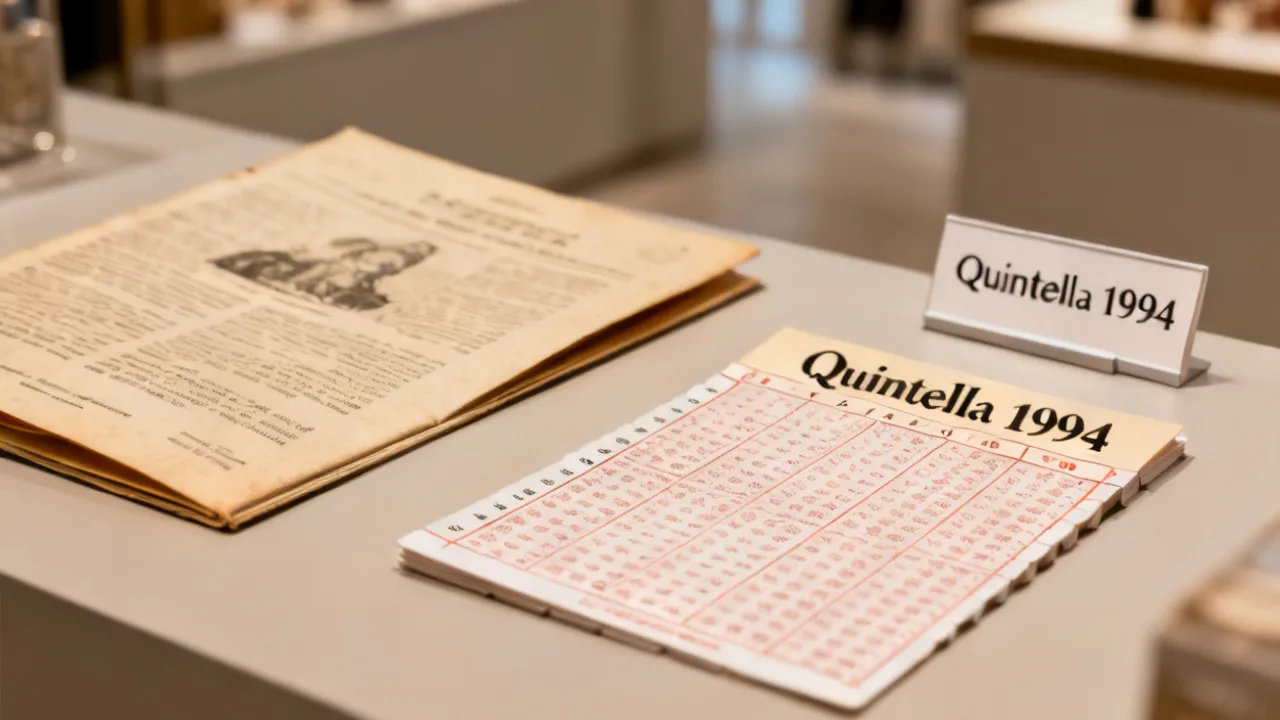
Understanding Quintella 1994: Market, Use, and Considerations
This guide explains Quintella 1994 from an objective, industry-informed perspective—covering what the term commonly refers to, how markets typically structure related products, and what buyers should verify before purchase. It then compares practical sourcing routes, outlines evaluation steps, and lists requirements that help reduce operational risk.
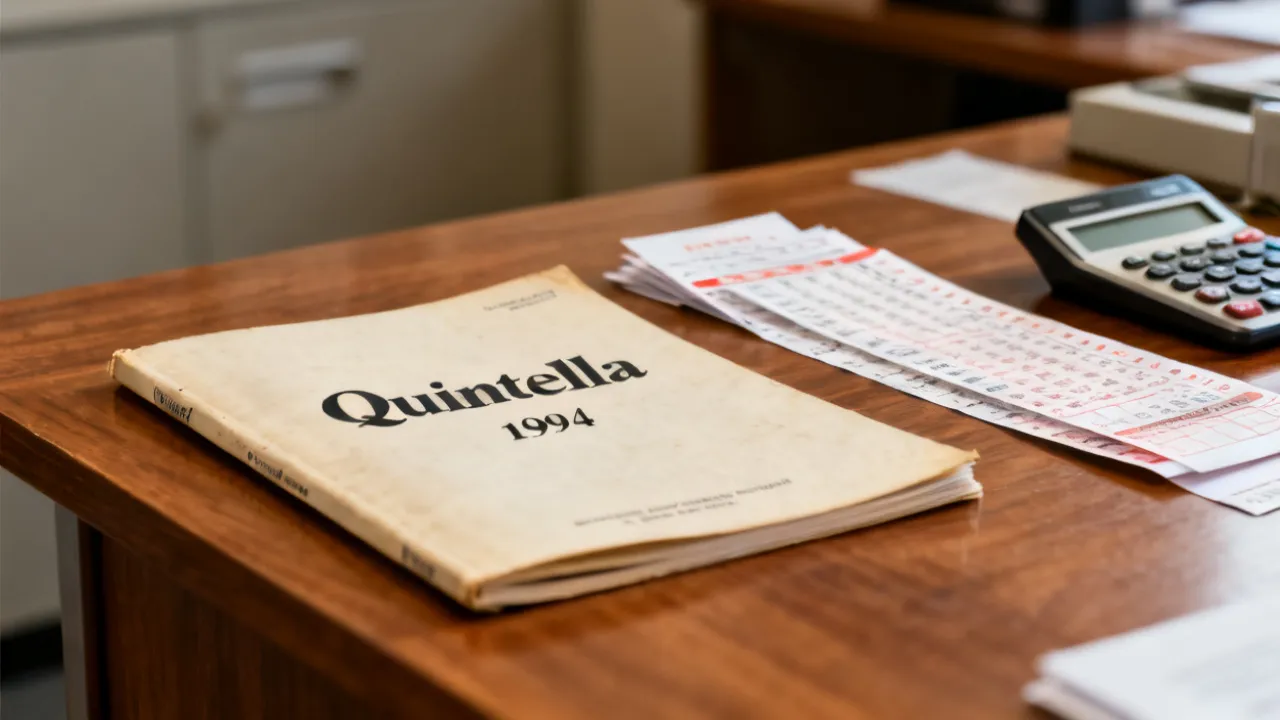
1) Quintella 1994: What to verify first
Quintella 1994 is a commonly referenced label tied to a specific “Quintella” product line and year-based identification. Because the same wording can appear across catalogs, collectors’ notes, and supplier listings, the very important starting point is verification: confirm the exact item specification, the intended use case, and the commercial conditions attached to the listing. For buyers and operators, this early confirmation directly affects compatibility, documentation validity, and downstream handling requirements. In other words, before you spend time comparing prices, you first need to reduce ambiguity—because with versioned identifiers, “close enough” can become expensive after delivery.
In practice, verification is not one task but a sequence. It begins with how the listing itself is written (what the seller claims), then moves into how the seller can substantiate that claim (what proof they can show), and finally becomes a readiness check for how you will receive, inspect, and either accept or reject the item. A well-run procurement workflow typically treats “Quintella 1994” as an index key rather than as the full definition of the item. The year is a component of the identifier, but the real meaning lives in the specification sheet, the part number, the packaging standard, the revision history, or the SKU mapping behind the scenes.
Another reason to verify early is that versioned items often have “silent differences.” Two units may look similar, yet differ in labeling placement, included inserts, firmware or configuration requirements, materials used, compliance documentation language, and even how batch traceability marks are printed. If you do not verify, you can lose the ability to prove what you received—especially in disputes—because many policies rely on edition matching and documentation alignment. Thus, the first priority is to extract enough evidence from the supplier so your organization can confirm what you bought and what you expected.
2) Objective background: how “Quintella” labels typically function
In many B2B and consumer marketplaces, a product name like “Quintella” is often paired with an identifying year to distinguish iterations—such as revisions, seasonal editions, or production runs. While the exact meaning can vary by seller, the year tag is usually used to separate catalog versions and reduce ambiguity. In practice, you should treat “Quintella 1994” as a shorthand that must be matched to a specific specification sheet, packaging standard, or reference code provided by the supplier.
It helps to think of “Quintella 1994” as a phrase that sits at the intersection of marketing and technical indexing. Sellers may adopt “1994” as a convenient human-readable label, but the systems that operate behind the scenes—inventory management, warehouse scanning, compliance archiving, and warranty administration—often rely on more precise codes. Those codes might be called part numbers, SKUs, internal catalogs, batch/lot numbers, revision codes, or document revision identifiers. Your verification therefore has to bridge the “human label” to the “system definition.”
Because different regions and marketplaces may format the label differently (for example, “Quintella-1994,” “Quintella 1994 Ed.,” “Quintella / 1994,” or a partial translation), the same visual text can map to different internal items. Also, some sellers reuse the “1994” year across multiple product categories if they consider it a branding era rather than a strict technical revision. You should therefore avoid assuming that all “Quintella 1994” listings represent the same thing. The only dependable way to treat the label is by demanding the exact specification details that the seller uses internally.
From an operational standpoint, this background implies a simple rule: the year is not the truth by itself; the year is an index that points to a set of attributes. Your job as a buyer is to confirm those attributes.
3) Why iteration years matter for procurement and compatibility
Even when the overall “Quintella” concept remains consistent, year-tagged editions can differ in materials, formatting, labeling, included components, or service terms. From an industry-expert standpoint, these differences are rarely cosmetic. They affect:
- Operational compatibility: whether accessories, paperwork, or system integrations align.
- Compliance posture: whether documentation reflects the claimed edition.
- Traceability: whether you can reliably track batch or source origin.
- Risk management: whether returns, warranties, or replacements follow the stated conditions.
To understand why year tags matter, it helps to consider how products evolve over time. Manufacturers and distributors update everything from component tolerances to label typography. In regulated environments, compliance documentation is version-specific. For example, a certificate, instructions, or safety sheet can change language to meet updated requirements. A buyer might still use the item successfully operationally, but if the paperwork does not match the edition, audits and internal governance can fail. The procurement risk is not merely about whether the item works—it is also about whether your organization can demonstrate that it is the right item.
Compatibility issues can also manifest during installation or integration. Many systems are unforgiving about revision alignment: a bracket designed for one revision may not mount cleanly on another; an accessory packaging designed for one edition may not contain the required insert or mounting template; or a configuration file may depend on edition-specific identifiers. Even when differences are subtle, they can require rework. Rework is often more costly than a slightly higher-priced, better-documented purchase.
Traceability concerns are similarly critical. When items are sourced from older stock, second-hand inventory, or bulk lots, the year label can become less precise. A seller might say “1994” for branding continuity while the actual manufacturing date or batch code differs. For organizations that need to manage recall risk, incident reporting, or quality assurance investigations, the difference between “the year on the label” and “the batch behind the label” can be the difference between being able to prove accountability and being stuck.
Finally, risk management depends on warranty and dispute protocols. Many sellers use “edition mismatch” as a key reason to deny refunds. If you do not verify early, you might receive an item that appears similar but is not accepted for replacement. That is why edition verification should be treated as a prerequisite, not as an optional refinement.
4) Supplier due diligence: what to ask, before you buy
Industry procurement teams typically focus on verifiable evidence rather than marketing language. If you encounter Quintella 1994 from any supplier, request:
- Exact product description (not only the headline name).
- Edition proof such as catalog reference, packaging photos, or the supplier’s internal SKU mapping to “1994.”
- Condition report if the item is second-hand or stored—especially around wear, legibility, or missing parts.
- Handling and fulfillment details (lead time, shipping constraints, and packaging method).
- Return and dispute policy that explicitly references edition matching.
Note: the “Quintella 1994” label alone is rarely sufficient for risk-affordable procurement. Treat it like a starting identifier, then validate the specification.
Beyond these core asks, due diligence should include clarification of what the seller means by “1994.” You can ask: Is “1994” a manufacturing year, a catalog edition year, a reprint year, a revision milestone, or a branding era? Sellers may not always know what you mean, but a good supplier will respond with a clear mapping. If they cannot, that is an immediate signal of elevated risk.
You should also request the document trail that ties the item to its edition. For example, if the listing includes instructions or a certificate, ask for photos of the document cover showing the edition year, or a scan of the first page containing the document revision. If the item is stored and shipped, ask whether the packaging includes tamper indicators, serial tracking labels, or batch/lot stickers. Even if you do not require those features, they often serve as the best evidence for edition matching.
If your use case requires compliance, ask for a “documentation packet” rather than just a single document. Many compliance failures occur when a seller provides one certificate page but omits supporting instructions or missing annexes. Ask for completeness details: what exactly is included, what is excluded, and what condition those materials are in.
Another practical due diligence area is communication responsiveness. In many transactions, verification fails not because information doesn’t exist but because time is wasted in email threads. Ask for evidence in a structured way and set a deadline for seller response. Procurement teams often specify: “Please confirm SKU mapping and provide packaging and label photos within X business days.” This turns uncertainty into a measurable step.
5) Industry context: how related marketplaces tend to price versioned items
Pricing for year-tagged products generally reflects scarcity, documentation quality, and demand from collectors or specialized users. However, avoid relying on a single advertised figure. Instead, compare multiple listings and confirm what drives variation—for example, condition grading, completeness, and whether the supplier provides edition documentation. If you see unusually large price gaps, ask for a written explanation tied to concrete differences (missing components, damaged packaging, incomplete paperwork, or older stock handling).
In many marketplaces, versioned items attract multiple buyer segments. One segment wants functional usability at minimum cost. Another segment wants authenticity proof and documentation for archival or compliance. A third segment is purely collecting and may value presentation. These segments have different willingness to pay. If you ignore this segmentation, you can misinterpret why a listing is more expensive. The more expensive listing could be more trustworthy, or it could be priced purely for aesthetics. Verification is how you distinguish these scenarios.
In addition, year-tagged items sometimes suffer from supply-side inconsistency. If an edition is discontinued, sellers might source parts from multiple lots and assemble “complete packages.” That can create listings where the core item matches, but the included paperwork or labeling does not. Buyers sometimes assume that because the product is year-labeled, everything inside is year-locked too. That assumption is risky. Price differences can reflect whether the seller actually has “true” edition documentation or whether they substitute generic materials.
Another factor is condition reporting transparency. Some suppliers include high-resolution photos, close-ups of identifiers, and explicit lists of included components. Others provide only generic images or partial documentation. Even when the item appears identical, the absence of evidence increases buyer uncertainty and increases the likelihood of a dispute. In procurement terms, this is the difference between paying for the product and paying for verifiability.
Finally, logistics and risk are part of price. Older or fragile packaging might require special handling. Sellers who ship with protective materials, tamper-resistant packaging, or careful batch label handling may cost more but reduce the chance that the evidence you need becomes unreadable or damaged.
6) Practical evaluation: an inverted decision lens
When you’re assessing Quintella 1994 as a potential purchase or inventory item, use an inverted approach: start with the constraints you cannot compromise, then work backward.
- Non-negotiables: exact edition match, documentation, and return terms.
- Operational needs: any required accessories or formatting.
- Logistics fit: delivery timelines and packaging integrity.
- Total cost of ownership: including potential rework, verification time, or replacement costs.
The inverted lens prevents a common procurement failure mode: evaluating too early based on “does it look right” or “is the price acceptable.” Instead, you list constraints first. For example, if your workflow requires that the edition match your internal documentation, then the key constraint is documentation alignment—not aesthetics. If you require batch traceability, then the constraint is whether the seller provides evidence of batch/lot. Once constraints are defined, you can reject listings that fail them even if they are inexpensive.
To apply this method effectively, treat each constraint as a filter with an acceptance criterion. Consider creating a simple checklist. For instance:
- Edition must match via SKU mapping or proof photo.
- Documentation must include an edition-stamped instruction packet or certificate cover.
- Return policy must allow refund or replacement if the edition is wrong.
- Condition must meet minimal requirements (legible labels; no missing components).
- Shipping packaging must prevent label damage.
Then evaluate listings in order of these filters. If a listing fails at any point, do not proceed. This keeps decision-making fast and reduces the likelihood that you commit to a purchase and later discover the verification gaps too late.
In many real-world cases, the inverted lens turns “price shopping” into “risk-adjusted selection.” You end up paying more when needed, but you buy certainty and reduce the labor cost of later remediation.
7) Comparison table (no links): sourcing and verification options
The table below compares common sourcing routes and the practical conditions/requirements typically associated with each. It is designed to help you make an objective choice based on verification strength and operational risk.
| Source route | Typical strengths | Verification level you can expect | Common requirements/conditions |
|---|---|---|---|
| Authorized or specialty suppliers | Better documentation consistency; clearer edition labeling | Higher (SKU mapping, photos, written specs) | Request edition proof; confirm return policy references edition matching |
| Secondary market sellers | Potentially broader selection of conditions (new, used, partial) | Variable (depends on seller diligence) | Demand close-up images; require a condition report; confirm refund terms |
| Collecting networks or forums (informal) | Community knowledge about “Quintella 1994” identification | Mixed (anecdotal unless documented) | Prefer archived references; verify against supplier documentation before purchase |
| Bulk procurement channels | Cost optimization at scale for organizations | Moderate to high (if batch documentation is included) | Request batch/lot traceability details; confirm storage/handling standards |
8) Step-by-step guide: how to confirm “Quintella 1994” accurately
Below is a practical, step-by-step process used in many procurement and assurance workflows. It focuses on edition confirmation, documentation, and operational fit—rather than assumptions.
-
Define your target specification.
Decide what “Quintella 1994” must include for your purpose (for example: completeness, packaging, or any specific formatting). -
Collect listing evidence.
Save the seller’s description, edition reference text, photos, and any specification sheet they provide. -
Request edition proof.
Ask whether the supplier can provide a SKU mapping, internal catalog code, or clear packaging evidence tying “1994” to the offered unit. -
Check condition and completeness.
For used or stored items, require images showing identifiers, any missing components, and packaging integrity. -
Validate supplier terms.
Confirm return or dispute conditions, including timelines and what constitutes a mismatch. -
Confirm shipping and handling.
Ask how the supplier packages to protect the edition identifiers and any sensitive components. -
Perform a pre-acceptance review.
Upon arrival, confirm edition matching against the evidence provided before final acceptance. -
Document your acceptance record.
Keep a concise audit trail (photos, invoice, and proof of matching) for future traceability.
9) Deepening the guide: practical verification tactics beyond the basics
Once you have the eight core steps, you can strengthen verification further with tactics that reduce ambiguity and speed up acceptance. These tactics are especially useful when the seller is reluctant to provide detailed evidence or when the item is sourced from older storage.
9.1) Match at least two independent indicators
Relying on a single indicator (like “Quintella 1994” printed on a label) can be misleading. Instead, confirm the edition with at least two independent indicators. For example, combine:
- a packaging label showing “1994” and
- a document cover or instruction sheet stamped with “1994” and
- or an internal SKU/revision code that the seller states corresponds to 1994.
If these indicators disagree, you have a reason to pause. Disagreement does not always mean the seller is dishonest—sometimes inventory is mixed—but it still means the risk of mismatch is high.
9.2) Confirm legibility and preservation of identifiers
Even if the correct edition is included, identifiers can be damaged in shipping. Verify whether the shipping process protects labels and inserts. Request close-up photos taken under good lighting, and ask the seller whether the unit has any peeling stickers, fading ink, or covered barcodes. This matters because an edition proof that is unreadable upon arrival can be treated as “not verifiable,” making disputes harder.
If you receive the item, your pre-acceptance review should include checking that the identifier areas you need are intact and legible. If not, document the condition immediately and initiate a resolution path while the evidence is fresh.
9.3) Use a “materials checklist” aligned with your operational needs
For some “Quintella” edition labels, the key differences may be packaging inserts or included components. Instead of asking vaguely, ask the seller for a “materials checklist” or an itemized list of included components. For example, you can request:
- what manuals/instructions are included (and their edition year)
- whether any installation templates, accessory parts, or mounting kits are included
- whether any certificates or compliance sheets are included
- whether packaging includes any protective covers or anti-tamper seals.
This checklist approach reduces the likelihood that you receive a “core unit” without the edition-specific add-ons that your operations require.
9.4) Plan for acceptance criteria and inspection time
Buyers often fail at the acceptance stage. They receive the item, confirm it visually in minutes, and then file nothing if it turns out later to be mismatched. The better approach is to define acceptance criteria in advance and allocate time for inspection.
For instance, your acceptance criteria might require:
- matching edition year on at least one primary label
- matching year on included documentation cover
- matching SKU/revision code to seller’s proof
- no missing components from the materials checklist.
Once those criteria are specified, your inspection becomes objective. It also improves internal accountability by showing that you followed a defined process.
9.5) Verify what the seller considers a “mismatch”
Return policies sometimes use vague wording like “item must be in original condition.” You want specificity about mismatch. Ask: if the edition year differs, what is the seller’s resolution? Do they refund, replace, or refuse? Do they treat it as a “wrong item” issue? Can you return for exchange at no cost?
The key is to align your acceptance expectations with the seller’s policy language. If the seller says mismatches are not covered, you should either require stronger proof before purchasing or avoid buying until the seller changes the terms.
10) Conditions and requirements to minimize operational risk
Across procurement top practices, certain requirements repeatedly matter for year-tagged goods. While each transaction differs, the following conditions generally reduce disputes and post-purchase friction:
- Edition match requirement: the supplier must clearly acknowledge what “1994” corresponds to in their catalog/SKU system.
- Documentation availability: a specification sheet, batch reference, or clear packaging identifier should be provided.
- Return policy clarity: refunds or replacements should explicitly reference edition mismatch rather than vague “condition” language.
- Packaging and protection: ensure shipping methods minimize damage to the edition identifiers or included materials.
- Communication record: keep written confirmations to prevent misunderstandings.
It can be helpful to expand each condition into what it means in real terms. For example, “edition match requirement” is not merely a verbal statement by the seller. It should be supported by at least one of the following: packaging photo, SKU mapping reference, document revision cover, or batch/lot traceability. “Documentation availability” means not just providing a link to instructions but providing the relevant edition-specific document set or proof that the documents correspond to that edition.
“Return policy clarity” should be read as a legal and operational mechanism. If the policy says you must return within a window, confirm the window and shipping responsibilities. If it says restocking fees apply, quantify them. If it says “buyer bears shipping for returns,” consider that in your risk-adjusted cost. Buyers sometimes accept such terms because the listing is cheap, only to discover that the total cost of a dispute becomes too high.
Packaging and protection includes more than protective padding. Consider how labels might be exposed. Some shipments keep the outer label on a box that can be removed or covered during transit. You may need the internal label or document packet unaltered. Ask how the seller handles tamper labels, sticker placement, and sealing.
Finally, a communication record means maintaining a clean paper trail. Use email or formal ticket systems. Avoid informal chat-only confirmations for edition-critical evidence. If evidence is shared, ask for it to be reiterated in writing: “As confirmed in your message dated [date], Quintella 1994 corresponds to SKU [code].” This reduces the chance that later arguments drift into misunderstandings.
11) Expert perspective on “price information” and supplier comparisons
Even without citing a specific price figure, you can evaluate pricing quality objectively. The top comparison is not “low price vs. very expensive,” but “lowest cost under equal verification.” In other words:
- If one supplier offers Quintella 1994 with stronger documentation, you may accept a higher listing price because it reduces verification time and dispute likelihood.
- If a cheaper listing lacks edition proof, the buyer may later incur additional costs—such as re-purchase, administrative time, or handling returns.
In industry terms, this is a form of total cost of ownership analysis. When you compare suppliers, request comparable evidence from each, then normalize your evaluation around certainty and service terms.
To make supplier comparisons more rigorous, convert your verification requirements into measurable cost drivers. For example:
- Verification cost: hours spent requesting proof, reviewing documents, and running acceptance checks.
- Dispute cost: administrative effort, shipping costs for returns/exchanges, and internal time spent documenting evidence.
- Operational impact cost: potential downtime or rework if the item does not integrate properly.
- Compliance cost: time spent reconciling documentation mismatch with audits or internal quality reviews.
When you consider these cost drivers, a higher listing price may become economically favorable. This is especially true for organizations where staff time is valuable and where documentation mismatches could trigger audit remediation or quality control overhead.
Additionally, “price information” can be misleading if sellers provide inconsistent conditions. One seller might include complete documentation; another might omit papers. If your procurement decision uses price alone, you may unknowingly compare non-comparable items. The remedy is to request evidence and confirm completeness before purchase.
Finally, track supplier behavior across transactions. If a supplier has a history of incomplete proof or unclear return terms, discount their price offers. Procurement best practices often include supplier scorecards that capture reliability, response time, documentation completeness, and dispute resolution outcomes. Even for a single item like Quintella 1994, these behavioral metrics can matter.
12) About localization and terminology (how buyers often describe it)
Buyers sometimes use “Quintella 1994” as a shorthand in emails, inventory notes, and collection logs. However, sellers in different regions may translate or format product identifiers differently. If the listing text uses alternate spellings, abbreviated names, or missing hyphens, treat it as a prompt to verify against the supplier’s internal catalog reference.
When communicating with suppliers, it helps to repeat the exact edition label you require—“Quintella 1994”—and ask for matching proof tied to that label.
Localization issues can appear in multiple layers. First is text formatting: sellers may remove spaces or adjust punctuation. Second is language translation: “Quintella” might be transliterated or abbreviated in local markets. Third is document translation: instructions may exist in multiple languages, and sellers might not always provide the edition-year-specific language set. If your compliance environment requires specific language or region-specific documentation, you must verify both edition and language.
Another localization factor is how sellers assign years. In some catalogs, “1994” might represent a print year of documentation rather than a manufacturing revision year. In other markets, sellers might use a “catalog edition year” while the unit itself follows a separate revision numbering. Your verification should therefore ask: which year does “1994” represent in your system? Is it tied to manufacturing, catalog edition, documentation print, or revision milestone?
In written communications, avoid relying on the seller’s paraphrasing. If the seller says “Quintella 1994 edition pack,” ask them to specify the document revision code and to attach or describe the exact document cover details. This ensures you are not buying a vague bundle labeled by marketing terms.
13) Expanded FAQs
What does “Quintella 1994” refer to?
It typically refers to a version or edition of an item associated with the “Quintella” name, identified by the year 1994. Because the exact meaning can differ between sellers, you should confirm the specific specification, SKU mapping, and documentation tied to that label.
How can I confirm I’m receiving the correct 1994 edition?
Ask the supplier for edition proof such as a SKU mapping, catalog reference, or clear packaging identifiers. After delivery, compare the received item to the evidence provided (photos, listing description, and any specification documentation). Ideally, confirm the edition through at least two independent indicators (for example, packaging label and document cover, or packaging label and internal SKU code).
Does “price information” alone indicate a trustworthy listing?
No. Price can reflect condition, completeness, seller diligence, and documentation strength. A higher price paired with clear edition proof can be more cost-effective overall when you account for verification time and lower dispute risk. Use “lowest cost under equal verification” as your guiding principle.
What should I check in supplier terms before ordering Quintella 1994?
Focus on return/dispute policy wording, whether it explicitly covers edition mismatch, fulfillment timelines, and how the supplier packages the item to protect edition identifiers or included components. Also confirm who bears shipping costs for returns and whether a mismatch can be resolved by replacement or only by refund.
Are secondary market sellers acceptable for Quintella 1994?
They can be, but verification must be stricter. Request close-up evidence, a condition report, and written confirmation of edition matching. Ensure your return terms are clear and workable, because secondary sellers often have more restrictive policies and may not provide edition-specific documentation unless asked.
What are the very common reasons for mismatches?
Common causes include unclear or incomplete listings, year-labeling that refers to catalog batches rather than the exact edition you need, missing components, and shipping damage that affects identifiable markers. Another frequent cause is documentation substitution: a seller may include instructions from a nearby revision or a general template while labeling the bundle as “1994.”
What documents should I keep for traceability?
Keep the invoice, seller listing evidence, photos of the received item, and any written confirmations that tie “Quintella 1994” to the supplier’s catalog reference. If compliance matters, store scans or photos of the document covers showing edition year and revision codes. Maintain these records in a structured folder or document management system so you can retrieve them during audits or internal reviews.
What if the seller cannot provide SKU mapping or edition proof?
If the seller cannot provide edition proof beyond the label text, treat the listing as high risk. You can either require the seller to provide additional evidence before purchase or negotiate terms that cover edition mismatch explicitly. If the seller refuses to provide proof or cannot explain what “1994” corresponds to in their internal system, it is often safer to decline.
How should I handle acceptance when the item arrives and looks correct but documentation is missing?
Do not rely solely on visual confirmation. If documentation is missing or incomplete, compare the received contents against your materials checklist and the evidence provided at purchase time. Document the condition immediately with photos and request a resolution (replacement, refund, or partial compensation) if your procurement expectations included documentation completeness. If the seller’s return terms exclude documentation issues, use that policy information to decide your next steps quickly.
How quickly should I inspect the item after delivery?
As quickly as feasible and within the return/dispute window. Many disputes become harder after time passes. If you detect edition mismatch or missing components, initiate communication promptly and include evidence. Waiting too long can reduce your leverage, especially if the packaging is discarded or if identifiers become harder to photograph.
Can I test compatibility without relying on documentation?
Sometimes you can perform functional checks, but documentation and edition alignment often remain critical for compliance and traceability. Even if the item appears operational, documentation mismatch can still be a problem for audits, warranty claims, or quality assurance. The best approach is to verify both functionality and documentation edition match.
14) Sources and reliability note
Because “Quintella 1994” is used as an identifier that can vary by supplier and marketplace, this article emphasizes verification processes and risk controls rather than claiming a single universal definition or quoting unverified figures. For broader procurement assurance practices, readers may consult general supply-chain risk and quality management guidance from recognized institutions such as ISO standards bodies (e.g., ISO 9001 quality management concepts) and procurement risk frameworks published by major industry research organizations. These provide decision principles for documentation, traceability, and dispute reduction without relying on market-specific claims.
When you apply these principles to Quintella 1994, the reliability focus is consistent: treat the label as a pointer, require evidence that the pointer maps to the correct edition-specific attributes, and ensure the commercial terms support a resolution path if the evidence does not match the delivered unit. That approach keeps procurement decisions defensible, auditable, and aligned with operational reality.
-
1

A Guide to Cost-Efficient Small Electric Cars for Seniors
-
2
Mastering Debt Consolidation: Boost Your Credit Score and Manage Interest Rates
-
3
Your Guide to Loans, Credit Checks, and Interest Rates
-
4
Affordable Independent Living: Finding the Right Senior Housing
-
5
Guide to Senior Living Apartments: Affordable and Comfortable Environments